24. Les roseaux sauvages
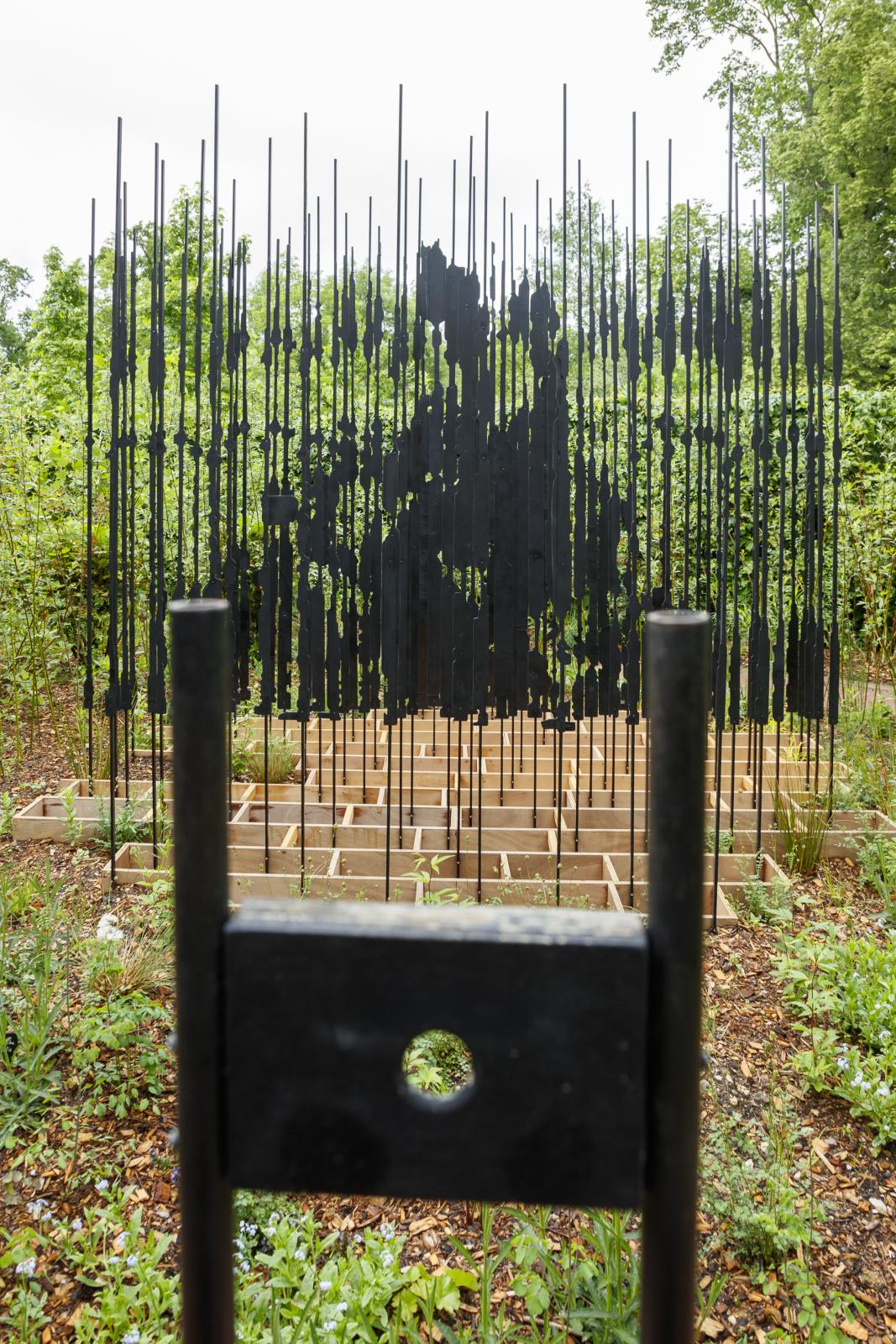
In Wild Reeds (André Téchiné, 1994), the Garonne is not just a setting; it’s where François, Serge and Maïté discover desire, friendship and the fragile emotions of first love. Its banks, covered in tall, tranquil reeds, harbour secrets only revealed to those capable of seeing mindfully. The garden seeks to create a landscape infused with the same intimate, turbulent emotion as the film.
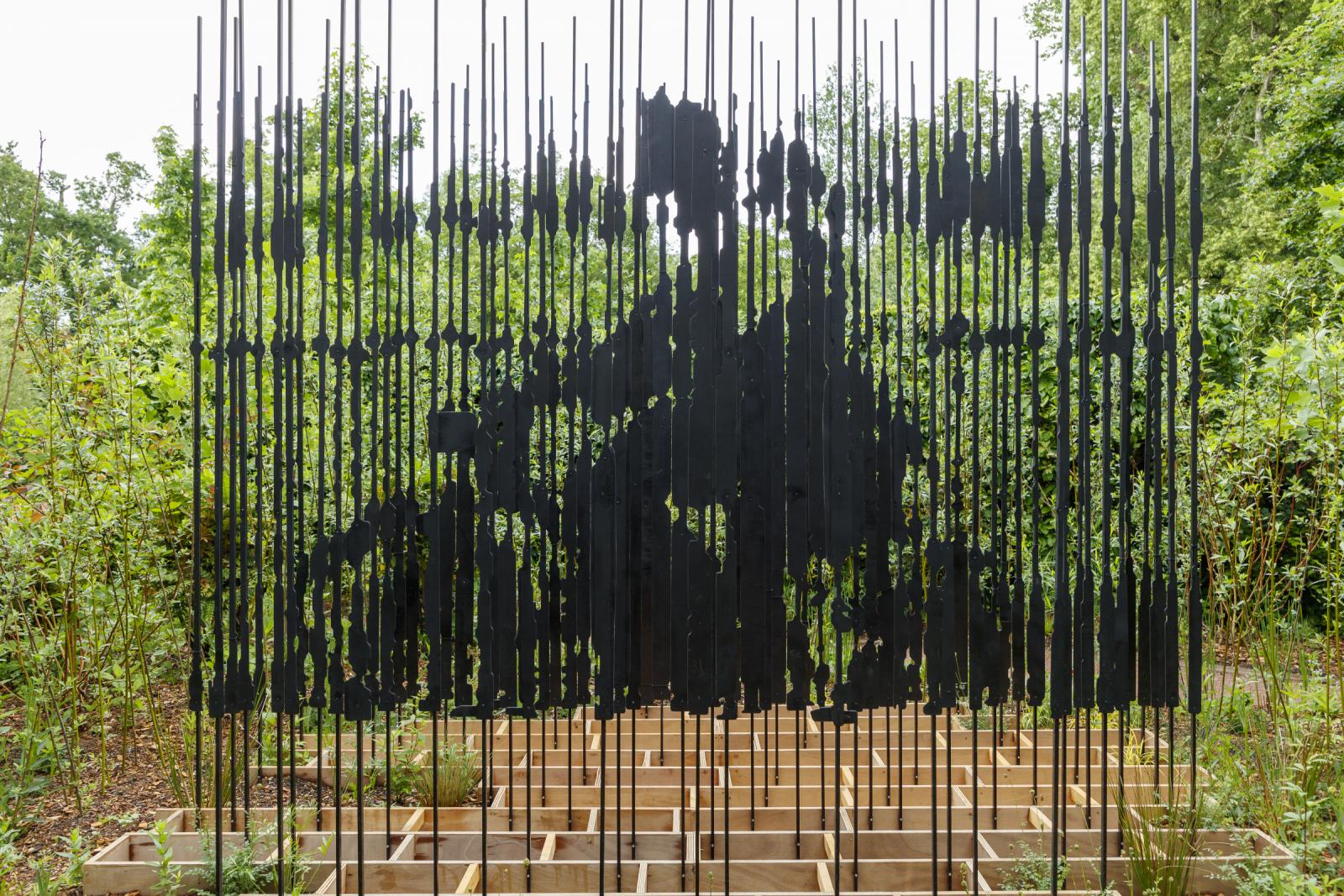
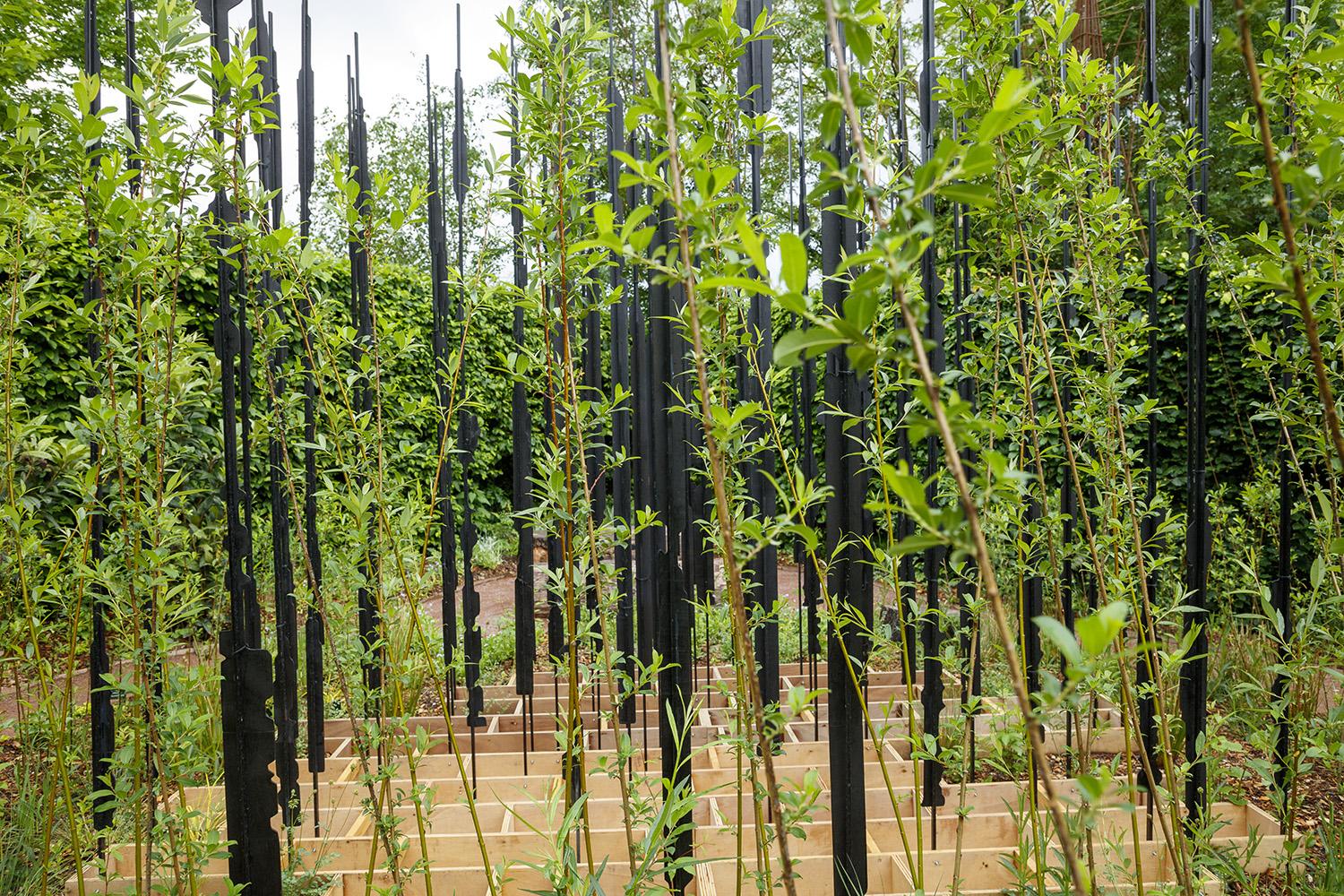
The space follows the climb of the river itself, among rocks, local plants and increasingly tall reeds. At the centre of the garden, black and white reeds taller than the others form an unusual vertical labyrinth, producing a stirring visual effect. The stems, made from recycled olive kernels, appear to move and overlay on top of each other in what is a nod to the language of cinema – to parallax – in which the camera’s movement creates depth by sliding the landscape shots against each other.
When viewed from a wooden bench, positioned further away, all is revealed. Because from this perspective, the seemingly randomly arranged reeds line up to form a hitherto hidden image: a silhouette of François with his arms around Serge on the motorbike, shortly after their meeting on the riverbank.
And so we see the parallel between the crystallisation of first love in the film and the revelation of the secret image in the garden. This becomes a bridge between cinema and nature, between lived memory and unexpected revelation. It is an invitation to allow ourselves to go with the flow of the river and to observe the landscape differently, to discover those subtle hints that only appear when we are close to the exact point where everything aligns.
DESIGNERS
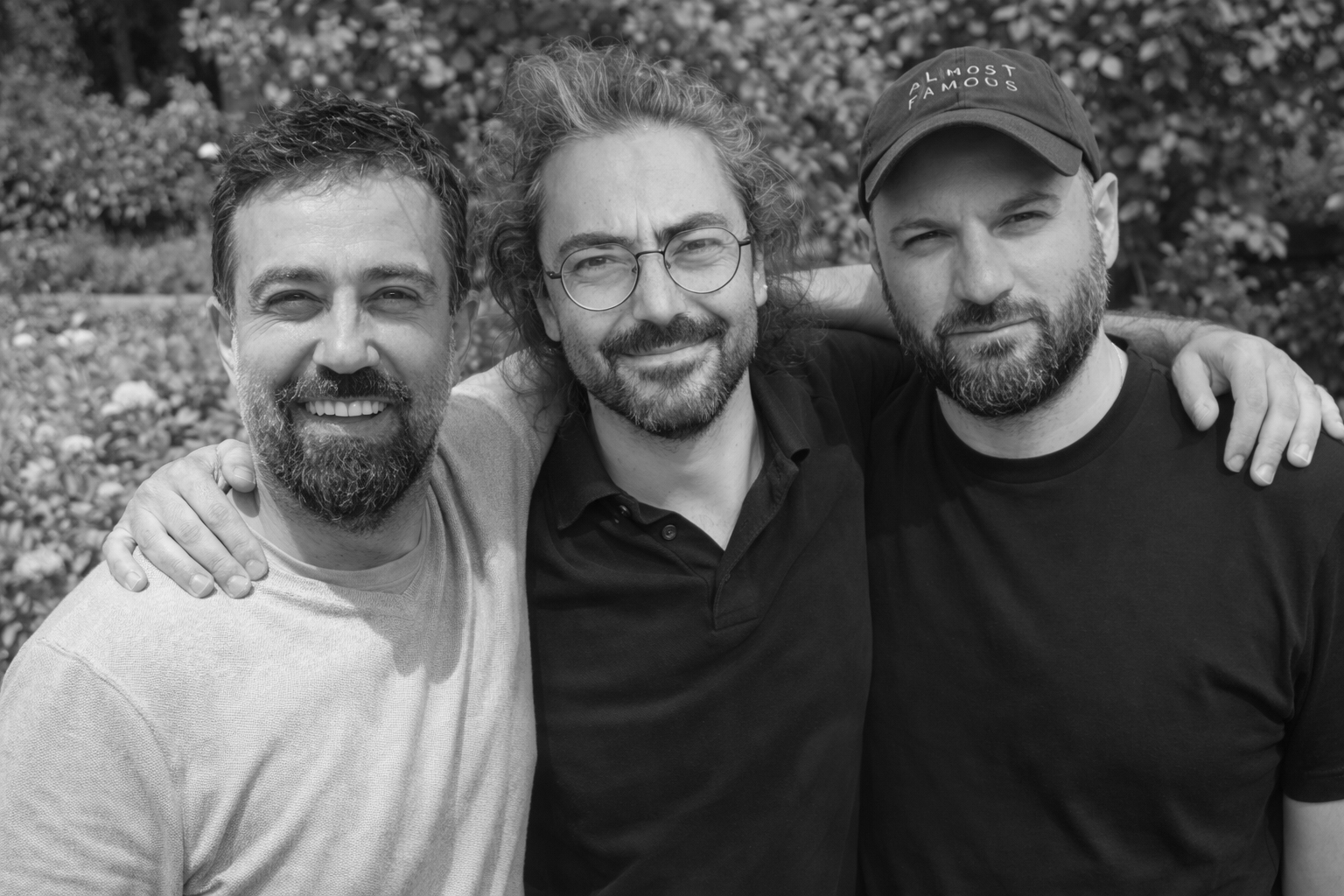
Sergio García-Gasco graduated with honours from the Polytechnic University of Valencia (UPV) in 2006. He holds a master's degree in architectural theory, criticism and history, obtained from the Federal University of Rio de Janeiro in 2014. Back in Spain, he defended his doctoral thesis at the UPV, graduating cum laude in 2023. He has worked with firms in Paris, London, Brazil and the United States, among others. He teaches at CEU San Pablo University, where he also carries out research. He is Deputy Director of the Superior Council of Spanish Architects' Associations’ (CSCAE) Observatorio 2030, where he has spent the last five years devoting himself to research and development of sustainable strategies and implementation of the UN Agenda 2030 in the Spanish construction value chain, coordinating and defining new strategies and solutions to reduce the sector's environmental impact. He participates in the International Union of Architects’ (IUA) and the Architects' Council of Europe’s (ACE) research groups on sustainability and architecture.
Emilio Valverde has a degree in advertising and public relations. Taking a highly creative approach, he develops and manages campaigns from conception of ideas to their implementation. He has worked on national and international projects for communications agencies in Spain and Brazil and has won numerous international awards for his work. His expertise covers branding, campaign creation, corporate communications and digital marketing, as a member of multidisciplinary teams where creativity is the name of the game.
For over fifteen years, Louis Sicard has navigated between landscape and artistic creation, transitioning from ephemeral installations in the wilderness to scenography, furniture design, photography and documentary video. Rooted in land art, his work is in close dialogue with photography: intervene as little as possible, observe as much as possible, co-create with nature. He collaborates regularly with multidisciplinary teams and takes part in international projects and festivals in Spain, France, Belgium and Germany.