29 MAR. – 1 NOV. 2026
2026 Art season
Arising sometimes from the depths, sometimes from transparencies, and sometimes barely perceptible, blue pervades the 2026 Art Season like a secret the works whisper to each other. Blue of the sky and the cosmos, blue of silence and the night, a mental more than a chromatic blue: the colour is an incentive to slow down, to see differently. In the dialogue it establishes with the Domain, the programme explores its many subtle shades. The gaze shifts, matter is transformed, the invisible surfaces. Through their paintings, sculptures and drawings, the artists sketch out an itinerary where blue and black act as invitations to shared breathing.
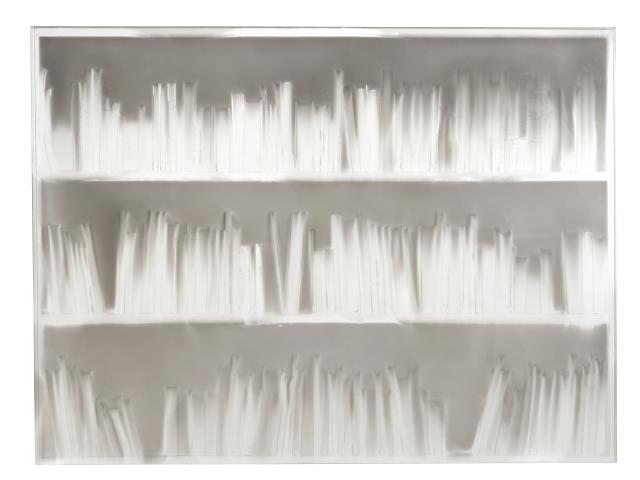
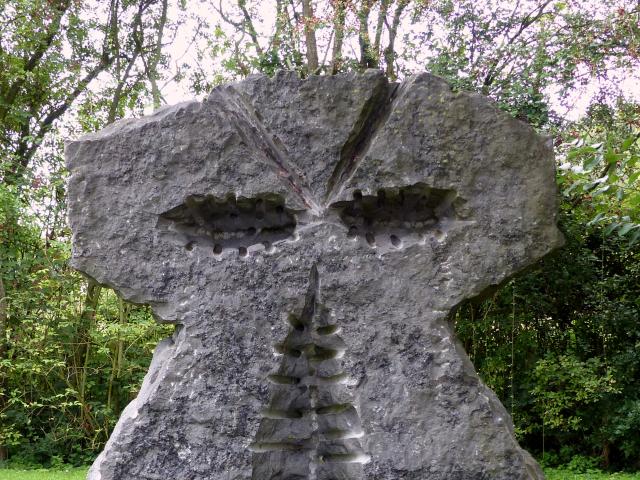
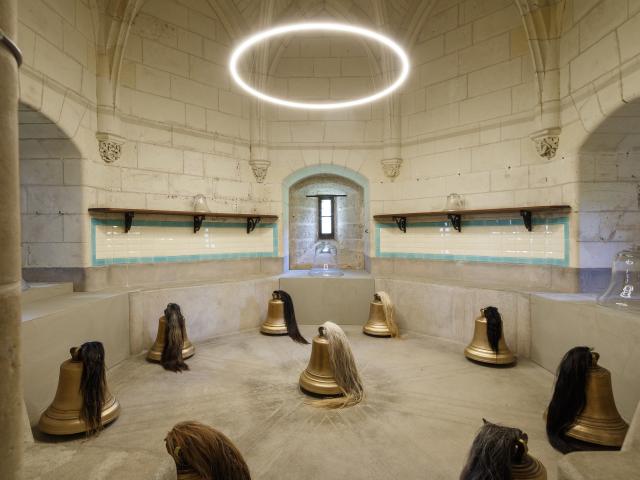
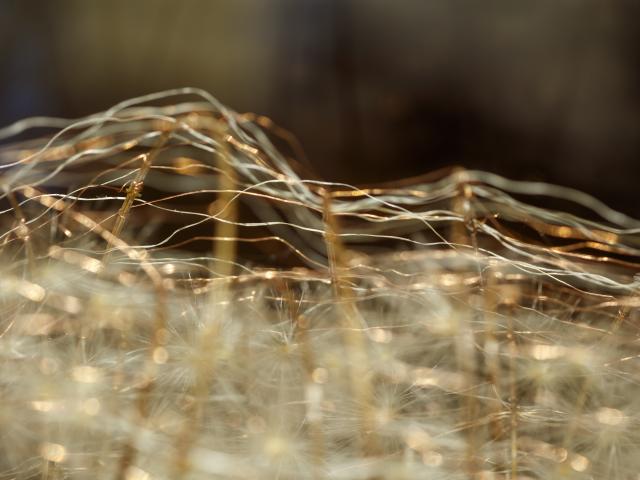
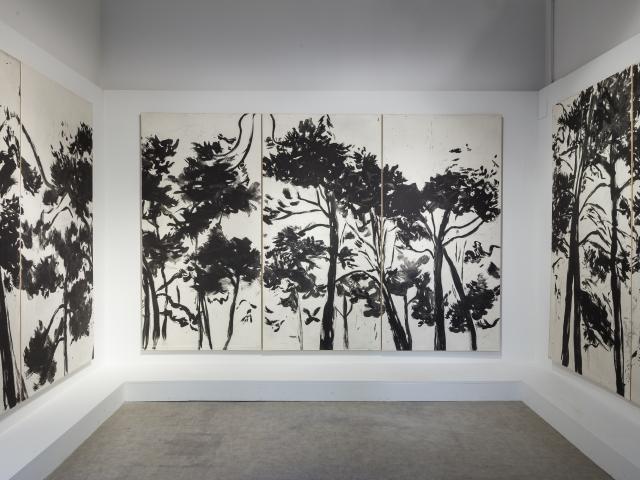
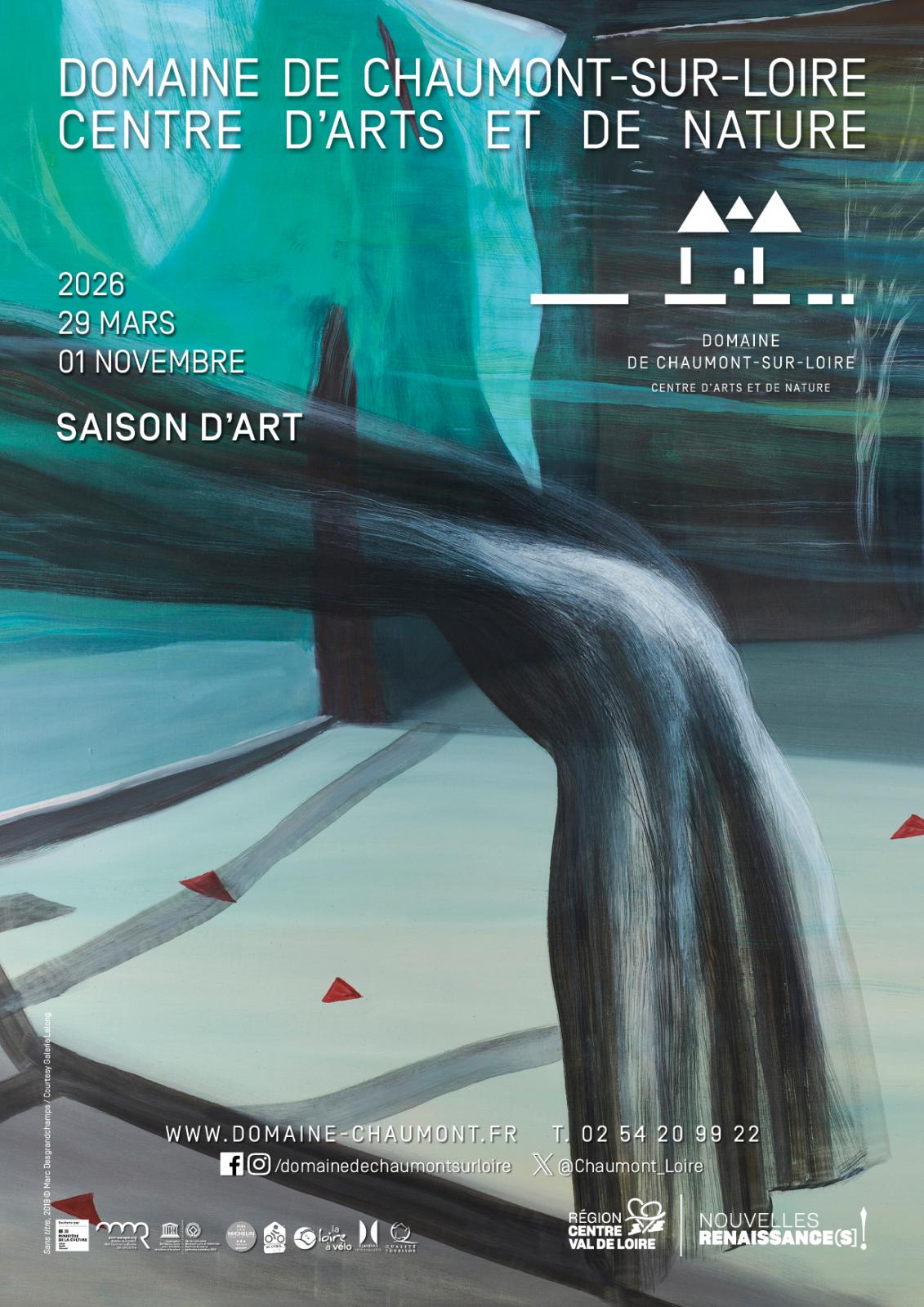
Marc Desgrandchamps sets the tone. In the Château’s Upper Galleries, his paintings open onto travelled, fragmented landscapes where black trees stand out against blueish backgrounds as if suspended in time. The blue creates a distance in them, a dreamlike atmosphere encouraging the eye to wander. It becomes a mental horizon, a passageway where the visible always seems to be on the point of melting away in favour of an elsewhere. Not far away, Claudio Parmiggiani evidences a very different relationship with the colour. His libraries created out of soot and smoke only show traces: outlines of absent books, phantom shelving, images of what is no more. These works are a reflection on knowledge, oblivion and everything that inevitably takes flight. Not far from there, the artist Antonio Crespo Foix’s spidery sculptures, fashioned from fibres and wires, dialogue with the Little Living Room’s priceless furniture. Diane’s Tower has become a place of meditation. Pascal Convert has installed a mysterious work there that captures sound as much as memory, testimony to how closely the artist is bound to the figures in the venue’s history. Objects once used for summoning that have now become mute, these bells speak to us of death, history and human frailty. If there is blue here, it is at the core: the blue of night and mourning. In the Porcupine Gallery, Eugène Dodeigne’s drawings, fusains and sculptures evoke a stubborn search for form and movement of the human figure and plant life alike, always expressed with force and vulnerability. Welcoming visitors in the Farmyard, a monumental sculpture by the same artist, a giant stone bird, imposes its severe, archaic presence.
In the Lower Le Fenil Gallery and one of the Agnès Varda Courtyard’s Galleries, between engraving and painting, Astrid de la Forest rolls out a universe of superimpositions, transparencies and rhythms. Blue moves through her trees and birds in flight like a breath of wind, connecting the ground to the sky and plant life to the air. Her works lead us into poetic contemplation, borne by a fascinating succession of suspended moments in time. In the adjoining area, Evi Keller provides visitors with a yet more immersive experience. Her dense, vibrant blue surfaces bear witness to transformations of the cosmos. Poignant and unfathomable, blue becomes matter, milieu, force field. The eye is drawn in and slows down, hypnotised by so much beauty.
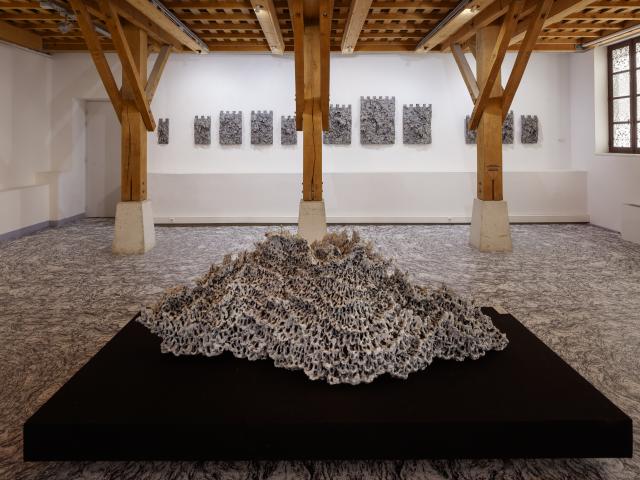
On the other side of the Farmyard, in the Donkey Stables, Anaïs Lelièvre also focuses on matter and its changing states. Her extraordinarily precise drawings and ceramics evoke fluctuations and metamorphoses. Spirals, strata and black hollows invent landscapes, as much mineral as organic, which take us on a journey between science and poetry.
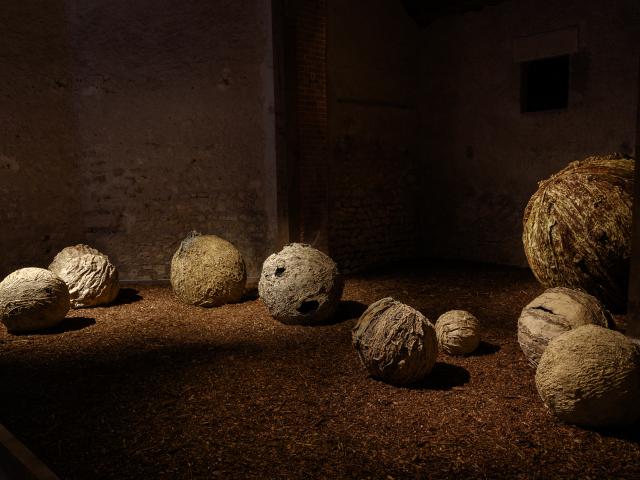
The Bee Barn hosts Janine Thüngen-Reichenbach’s sculptures. Fibrous, stratified plant forms, they are cocoons, seeds, bodies in the making, always relating to trees and their bark.
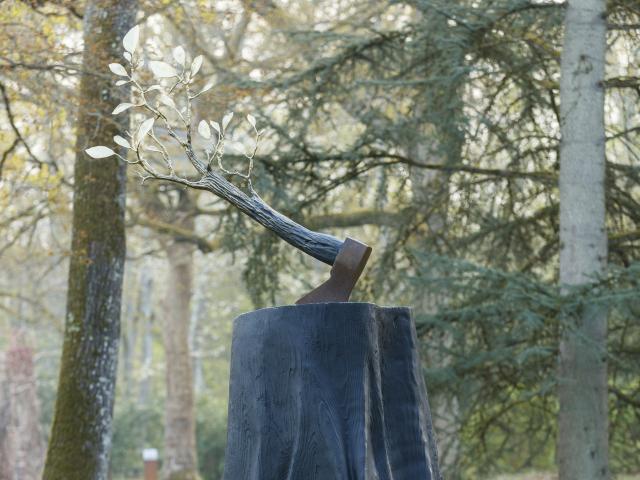
Nor far off, Ghyslain Bertholon introduces a fantastical narrative in the Historic Grounds, taking us by surprise. So what is the story about a tree killed by an axe, from which golden leaves are reborn? Intriguing, the work, black as night, activates the landscape and gets visitors to pay fresh attention to nature’s fundamental forces.
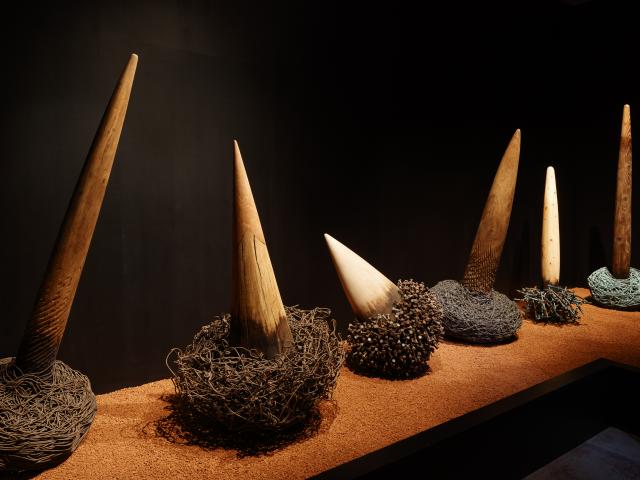
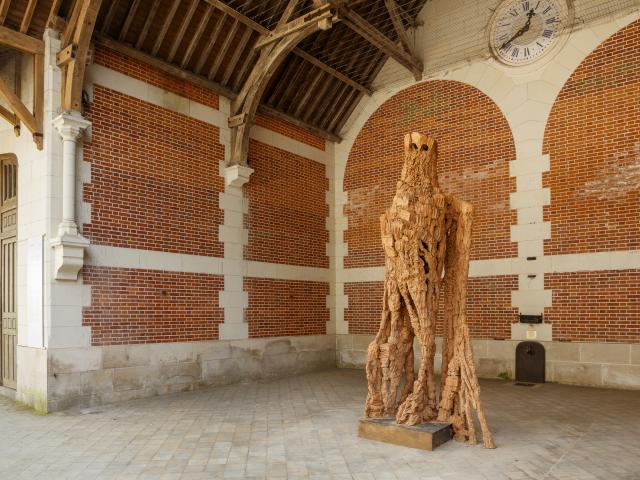
The Stables Gallery accommodates Bernard Pagès’ sculptures. Wood, metal, ligatures: his works stand matter-of-factly in fragile verticality, as if each of them has had to negotiate its equilibrium with matter and gravity. These understated yet powerful presences anchor the Art Season in a direct relationship with the earth, gesture and the patient construction of forms. A few steps away, the Stables Canopy hosts an owl by Lionel Sabatté, which watches over the Courtyard in silence, echoing Eugène Dodeigne’s giant bird.
Designed as a journey, the 2026 Art Season once again aims to be a sensory experience, a composition in blue and black. The blue, visible and interior in turn, accompanies visitors on a stroll where each work opens up a space of renewed perception, between silence and energy, between memory and transformation: an invitation to inhabit the venue differently, to take the time to look, listen, feel and rise up.
.
Chantal Colleu-Dumond
Commissaire des expositions