06. Le jardin rouge-baiser
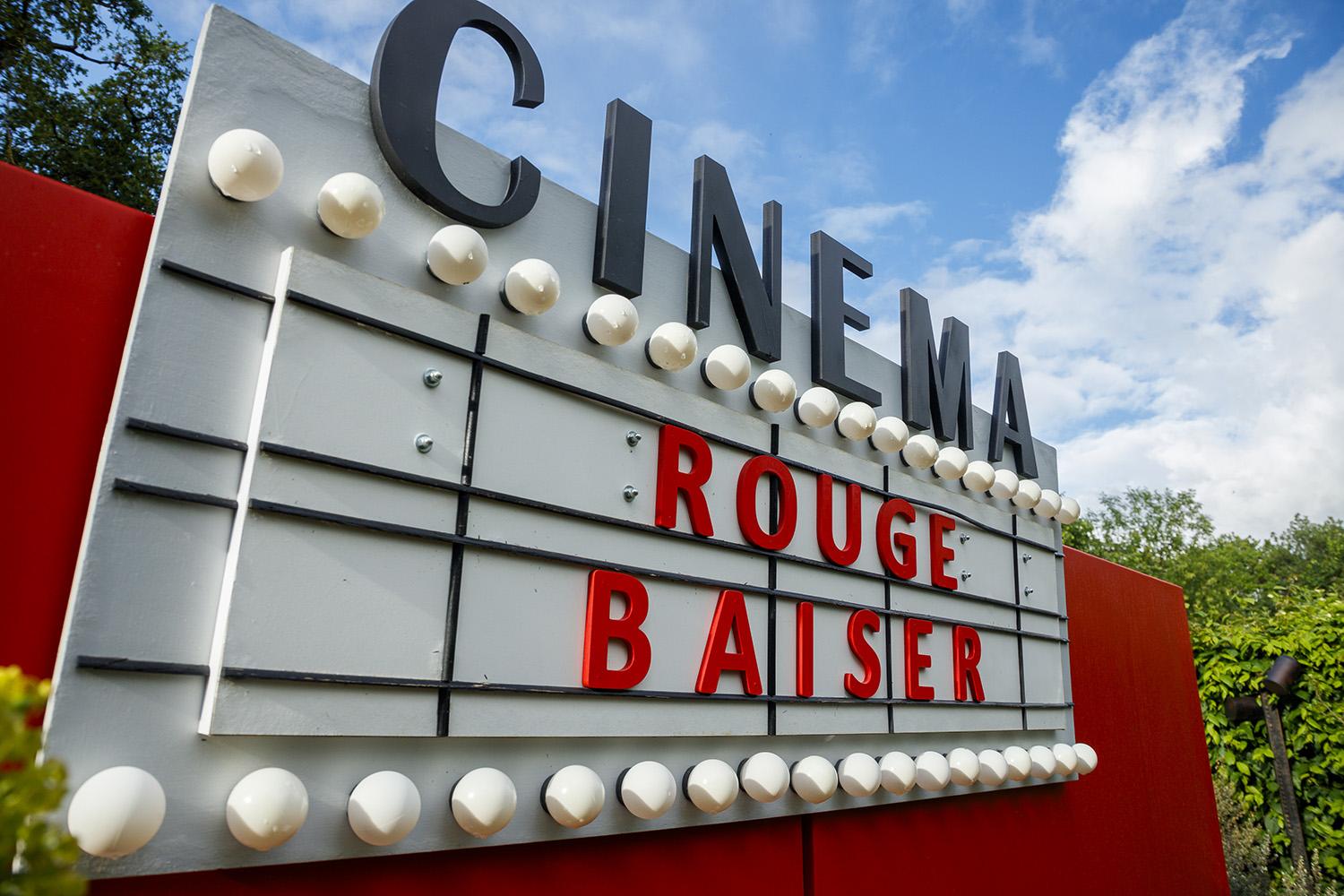
“Kiss me”, Michèle Morgan told Jean Gabin in Port of Shadows.
The ultimate film moment, that kiss on the big screen has since been reproduced in countless different ways. Captured, coded and endlessly reinterpreted, it often marks the transition between storyline and pure emotion. And it is into this very tipping point that Rouge-Baiser (Red Kiss) plunges us, through a sensory journey tracing back classics of the 7th art.
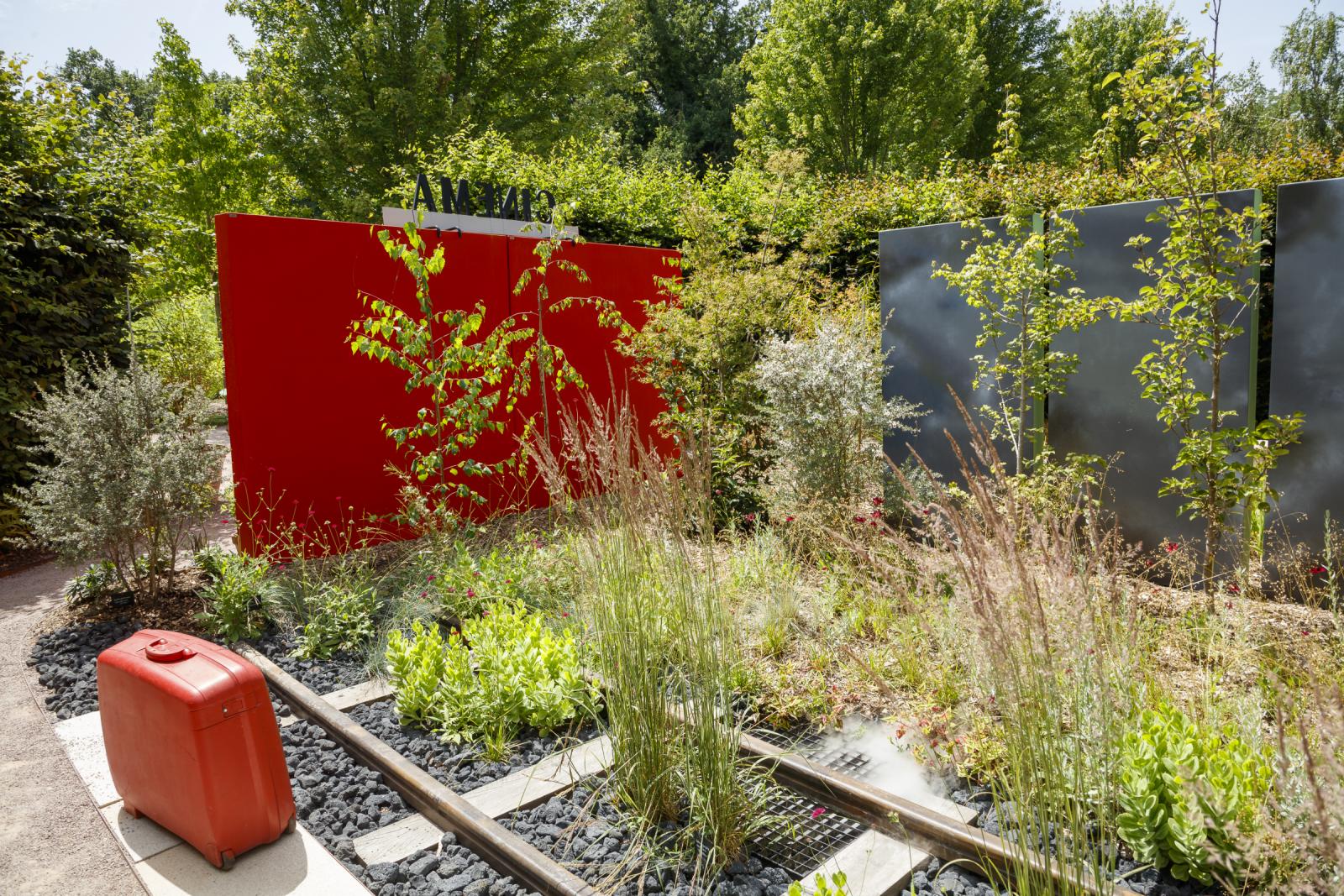
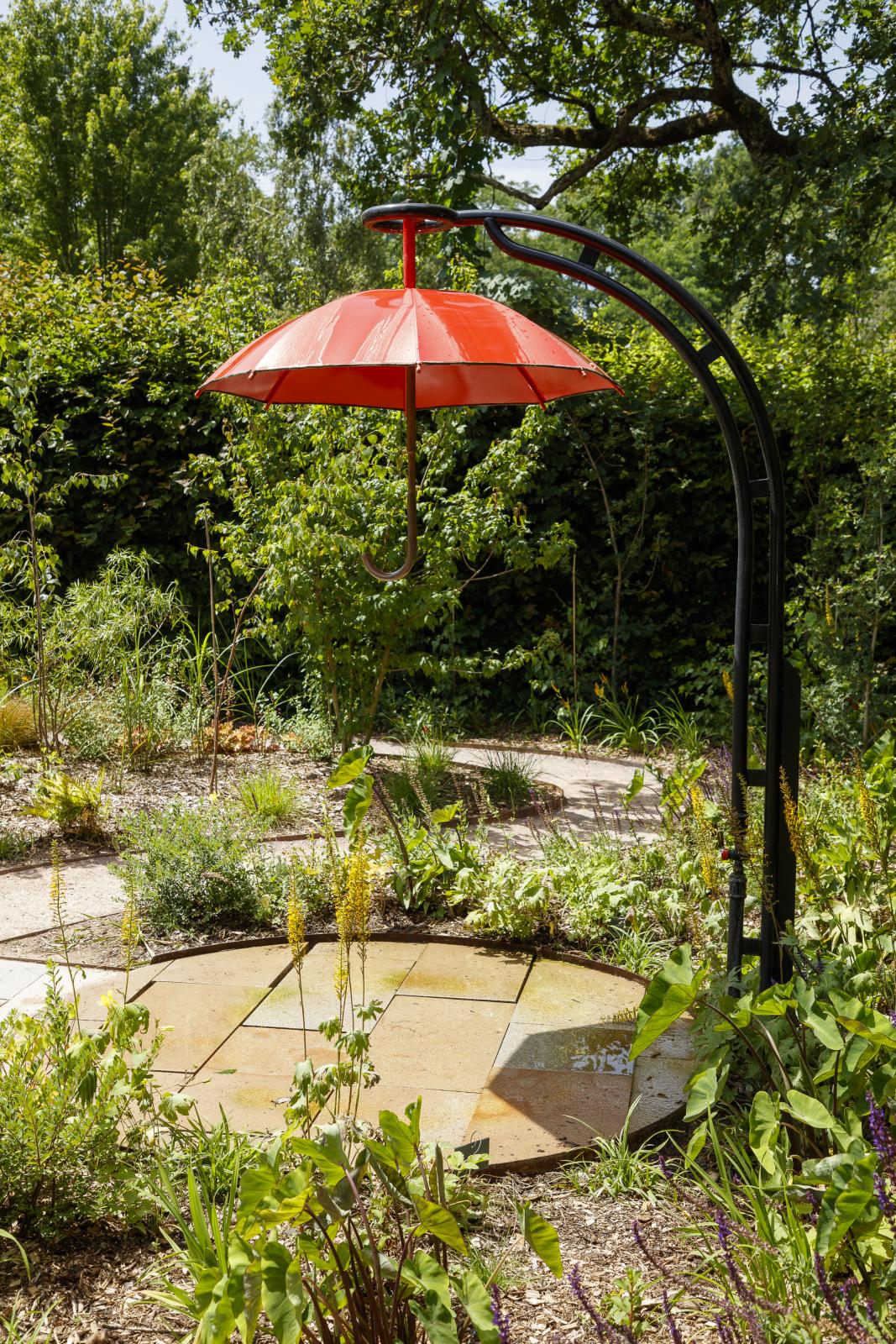
The garden, a quiet refuge from everyday life, replays these scenes that cinema has forever etched into our imaginations. From station platforms to sunsets to kisses in the rain, the set is brought to life.
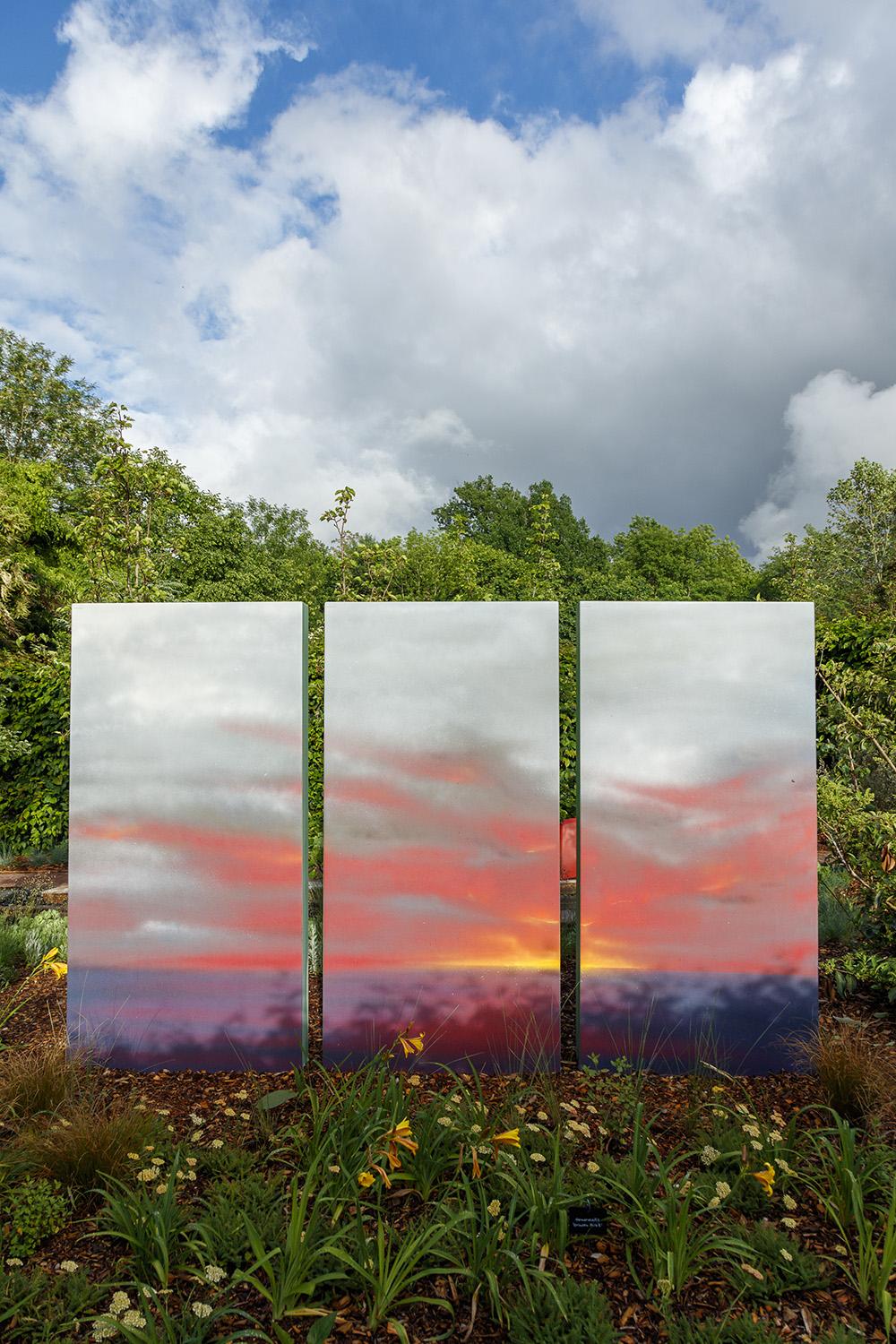
Shades of silver dotted with purple cast a sense of nostalgia over an abandoned station platform, evoking the deeply moving reunions between Anouk Aimée and Jean-Louis Trintignant in A Man and a Woman. Further on, amongst rainbow-coloured vegetation behind a mystical curtain of rain, we can almost make out Gene Kelly, twirling around frivolously in Singin’ in the Rain. Finally, a flamboyant fresco and a plant-based extension thereof featuring honey, copper and ochre hues evocative of a sunset conjure up images of Kate Winslet and Leonardo DiCaprio at the bow of a free and sweeping love story in Titanic.
What would your film be? Why not, for just a brief moment, be daring enough to turn to face it and say, “Kiss me”!
DESIGNERS
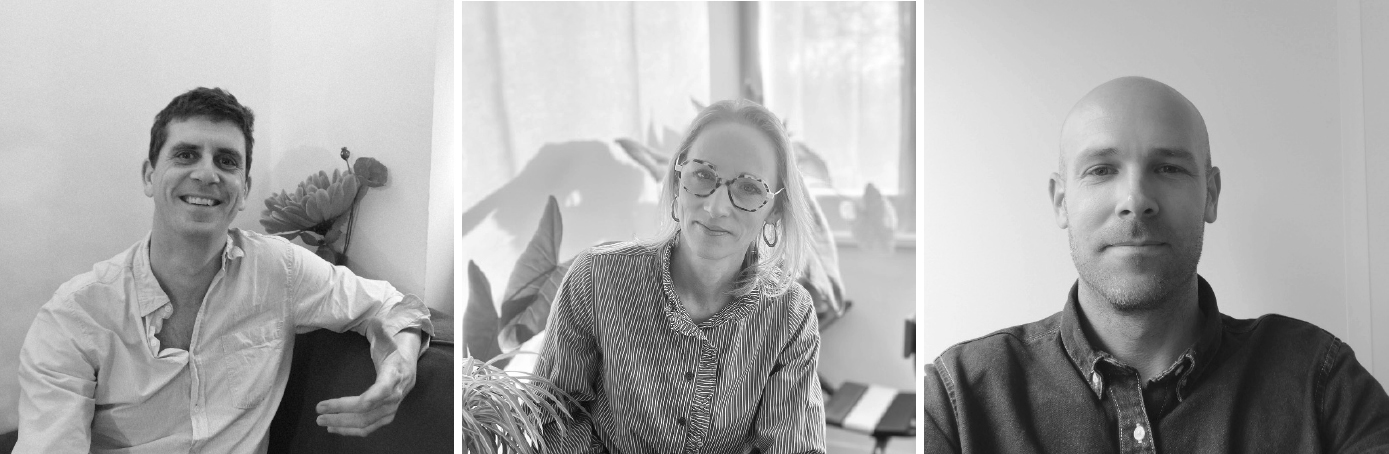
As a landscape designer, Mélanie Tant conceives public spaces as places for sharing, breathing and escape, in response to contemporary environmental issues and the need to improve residents’ wellbeing. Having grown up in the Paris suburbs and trained at the National Higher School of Nature and Landscape (ENSNP) in Blois, her relationship with landscape has been nourished by the contrasts and complementarities between city and nature, from the feet of buildings to the banks of the Loire, where she now lives after working in various landscape and urban planning firms. She favours an approach that is pragmatic, sensitive and attentive to "doing things together" and the project’s poetic aspects, on a wide variety of subjects and in a wide variety of contexts. Through her career, she has developed an interest in urban and landscape composition, as well as in plants as project material. Accustomed to large-scale public projects but attached to the multiscalarity of her profession, she is taking part in this year's Festival with a view to working on the scale of the garden and expressing her desire to create intimate spaces conducive to dream, wonder and escape. It was with this in mind that she formed the À Pieds Joints collective, the Rouge-Baiser project’s catalyst, whose mischievous name (which translates as Red Kiss) expresses the impetus, gaiety and spontaneity that permeate the team and their approach.
After initial training in space design (Bachelor's degree) and then in architecture (Master's degree at ENSA-V), and initial professional experience in an agency, Vianney Bera completed his training with a Master's degree in urban planning at the Urban School of the Sciences Po research university in Paris, in order to broaden his field of expertise to include territorial, programmatic and strategic project issues. After Paris, he moved to Nantes in 2018 to work as a project manager at an architectural and urban planning firm, where he carries out cross-functional project management assignments for private and public sector clients, working on a variety of projects at different scales, from architecture to urban and regional planning. He is currently involved in a wide range of projects, from architectural programming to real-estate master plans, by way of project management support (PMS) and general project management, with involvement in all key phases of operations: pre-programming, programming, design supervision and support through to delivery. Sensitive to the visual arts and attentive to the possible bridges between architecture and landscape, he joined the À Pieds Joints collective with the desire to redo projects on a small scale, explore new materials and reconnect with creative storytelling.
Born in Le Havre, a major port rebuilt after the Second World War, Bertrand Pigeon developed a taste for large-scale compositions and palimpsests very early on in life. After becoming an urban planner, he continued to focus on the question of appropriation of places by their inhabitants. Working with local authorities on public space development projects, he is convinced that an intuitive, almost emotional understanding of a site by its users is key to a project's success. His different professional experiences, between design offices, real-estate development and local authorities, have led him to tackle a variety of themes and phases of projects at all scales, from buildings to territory, questioning timeframes, uses and sites in order to develop relevant projects that will always be at the service of whoever lives in them. Sensitive to the sustainability of things, he seeks to integrate new practices into his projects, both in terms of environmental quality and the place of art in unusual places. And it is precisely because he normally spends his days working on themes far removed from the art of the garden that Chaumont-sur-Loire provides him with an to re-examine his practice: by using living material and reversing the scale, how can a public space be turned into an evocation of the intimate?