“What have we done with our empathy for plants and animals?” Han Kang, 2024 Nobel Prize in Literature
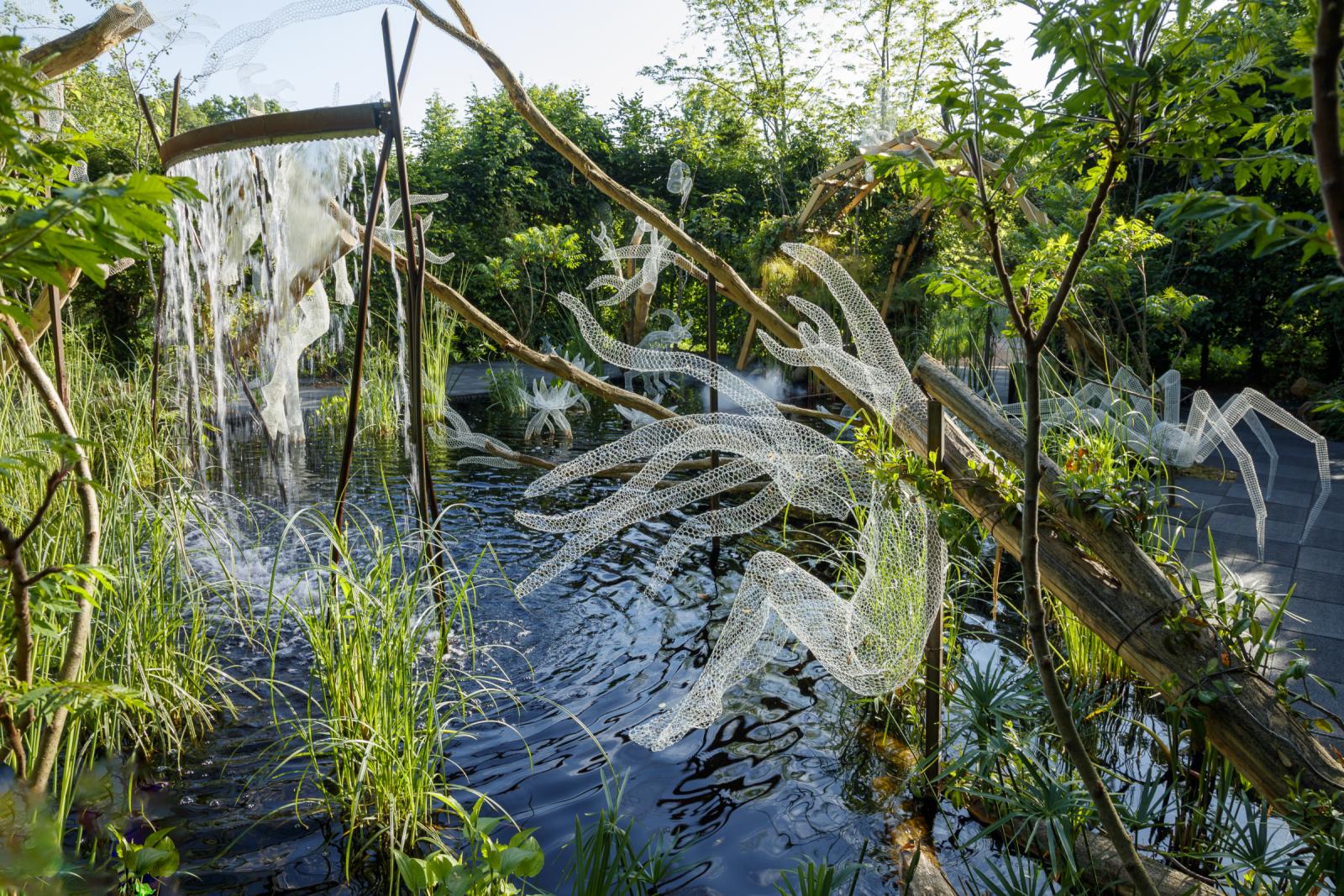
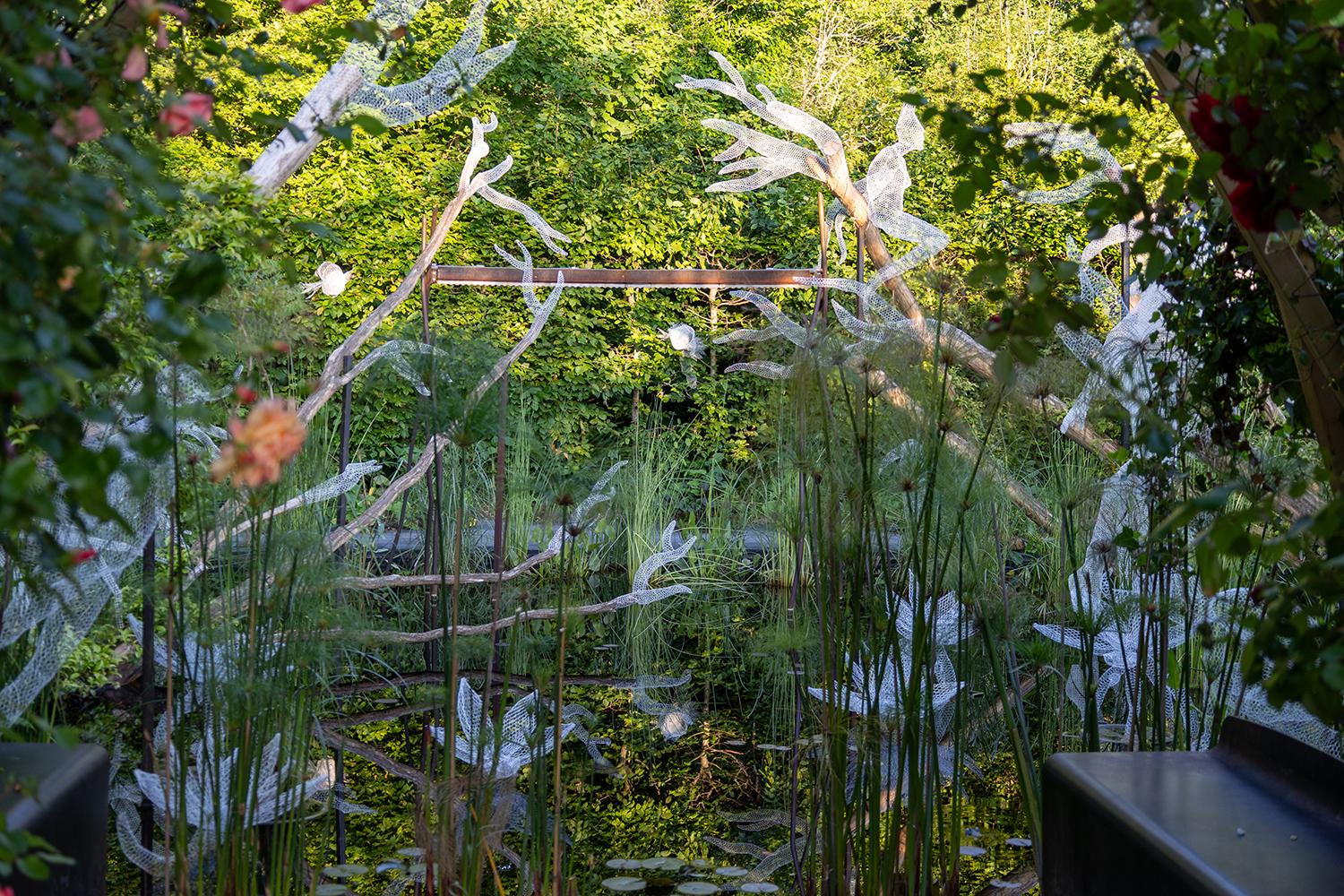
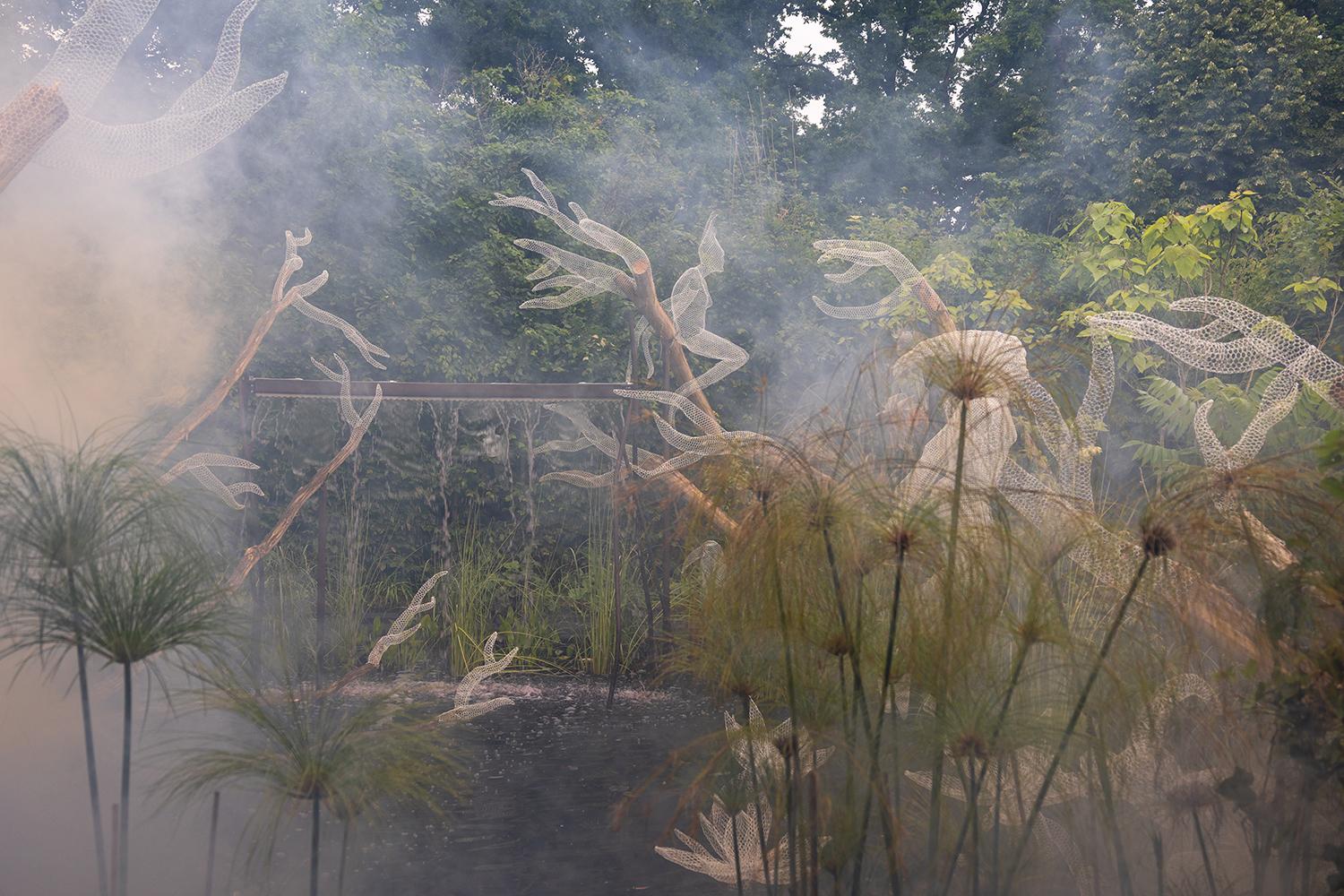
Inspired by Hypnerotomachia Poliphili: The Strife of Love in a Dream written in 1499, Le Jardin des Songes (The Garden of Dreams) is a timeless place, an ever-changing world. Physical reality merges with that of fantasy, visions and apparitions. Along this contemporary path of discovery, sculptures fashioned out of white wire netting change the architectural ruins of the original novel into allegories of Nature. In the middle of this “story-garden” is a magic water mirror surrounded by aquatic plants, like an eye deep in the forest (a powerful symbol of life which activates our senses). It reflects some aspects of our inner selves, on a quest for maturity. The water appears behind a pergola inspired by Leonardo da Vinci, symbolising knowledge. There is a little girl sitting on a tree stump.
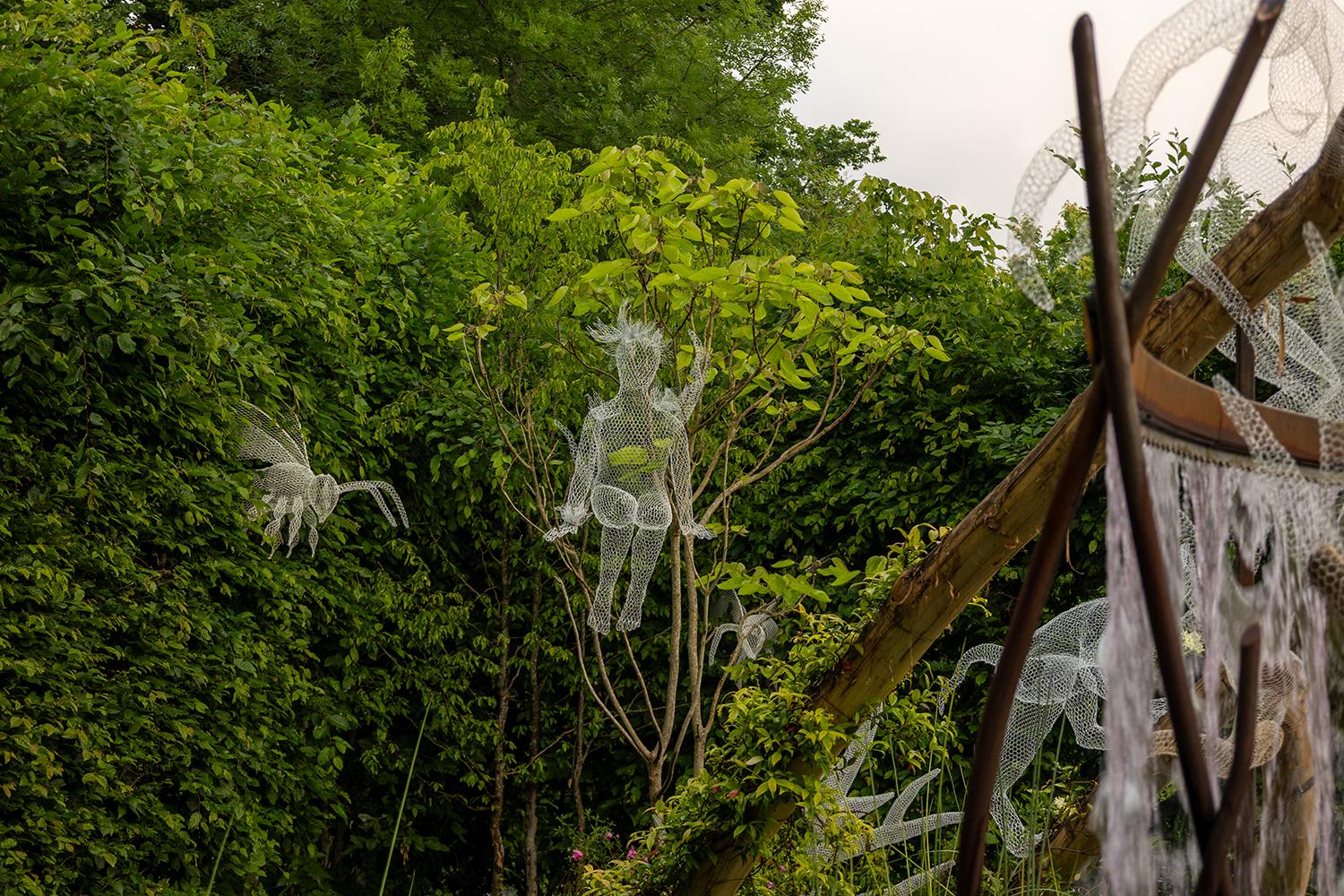
All around, perched on branches, suspended in the sunshine, emerging from the water and bursting forth from the aquatic or climbing plants, between mist and dappled light, hybrid beings appear (winged nymph, butterfly-amphibian, epiphyte-bird, root-insect) — half-plant, half-animal, almost human figures. The sculptures celebrate the four fundamental elements of our existence: earth, water, air and fire. Thanks to their gossamer, faint outlines, the sculpted apparitions flit between the real world and the world of dreams, just like the visions of Poliphilus. Trickles of water (symbolising rain) and evocations of mist (symbolising evapotranspiration) accentuate the haunted atmosphere of the garden. The spirit of Mother Nature lurks within.
DESIGNERS
Thierry HUAU, landscaper, Daniela CAPACCIOLI, sculptor, Association “Berceau de Nymphéas”
FRANCE
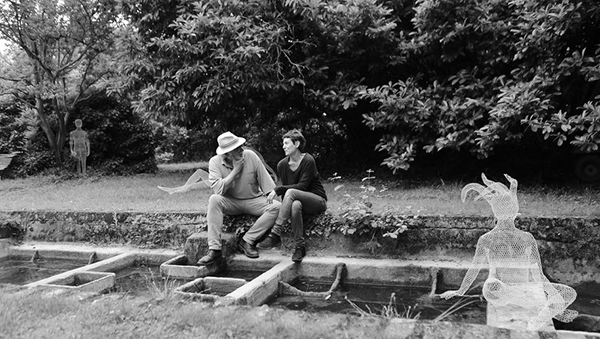
Thierry Huau is an accredited landscape architect from the École Nationale Supérieure de Paysage in Versailles, a town planner and ethnobotanist. He is involved in designing and implementing many national and international projects. His work regularly addresses environmental, town planning, architectural, landscape and social issues, combining preservation of historical and cultural heritage with regional planning. He is the artistic director of numerous projects. He created Atelier Thierry Huau in Giverny in 2018, which is anchored in the green wave and aims to stimulate debate around the notion of natural and built heritage. Thierry Huau seeks to convey the beauty of a site with a garden through its history and geography, from Paris to Beirut, from Antananarivo to Hanoi. He borrows his tools from the art of scenography to develop his own playful and creative palette. Through its various contributions, conferences, publications, books, colloquia and events, Atelier Thierry Huau takes a careful look at our environment and a place’s unique culture. Thierry Huau is the driving force behind innovative tourism and cultural development projects focusing on culture, gardens, tourism and rural areas. In 2018, in Temple-sur-Lot, Thierry Huau set up the Berceau des Nymphéas association to promote heritage awareness in rural areas and create cultural tourist destinations off the beaten track. Atelier Thierry Huau is currently represented by Augustin Descamps in Shanghai and by Angelica Guareschi in Florence.
Daniela Capaccioli is a visual artist whose work is characterised by the innovative use of wire mesh to create sculptures that are simultaneously lightweight, see-through and powerful. She studied scenography at the Brera Academy of Fine Arts in Milan and completed her training with various apprenticeships in clay modelling and turning, casting and drawing, perfecting her skills through classes and workshops in France and Italy. Since 2011, Daniela Capaccioli has been working as a freelance visual artist, exhibiting her work in public places and festivals in France and Italy. Her creations have been presented in prestigious venues such as Parc Floral, Parc Montsouris and the Serres D'Auteuil in Paris. Daniela Capaccioli has also worked as an instructor in various pottery and sculpture workshops. Her solo exhibitions, such as Les Formes de l'Invisible at Parc Floral de Paris in 2021 and the installation in the pond at Parc Montsouris, illustrate her commitment to creating a dialogue between her works and the natural environment, with each work seeming to blend harmoniously into the landscape. This deliberate choice to exhibit outdoors creates a living scenography, where art and nature respond to each other. Her work can also be found in public collections such as the Château de Ranrouët, Le Jardin Alpin Saussurea and the Villa di Toppo Florio in Italy. Through her sculptures, Daniela Capaccioli invites the viewer to engage in poetic contemplation, exploring the limits of human perception and the beauty of the invisible. Her work is a constant quest for harmony between art, nature and the mythological stories that inhabit our collective imagination.