19. Nausicaä
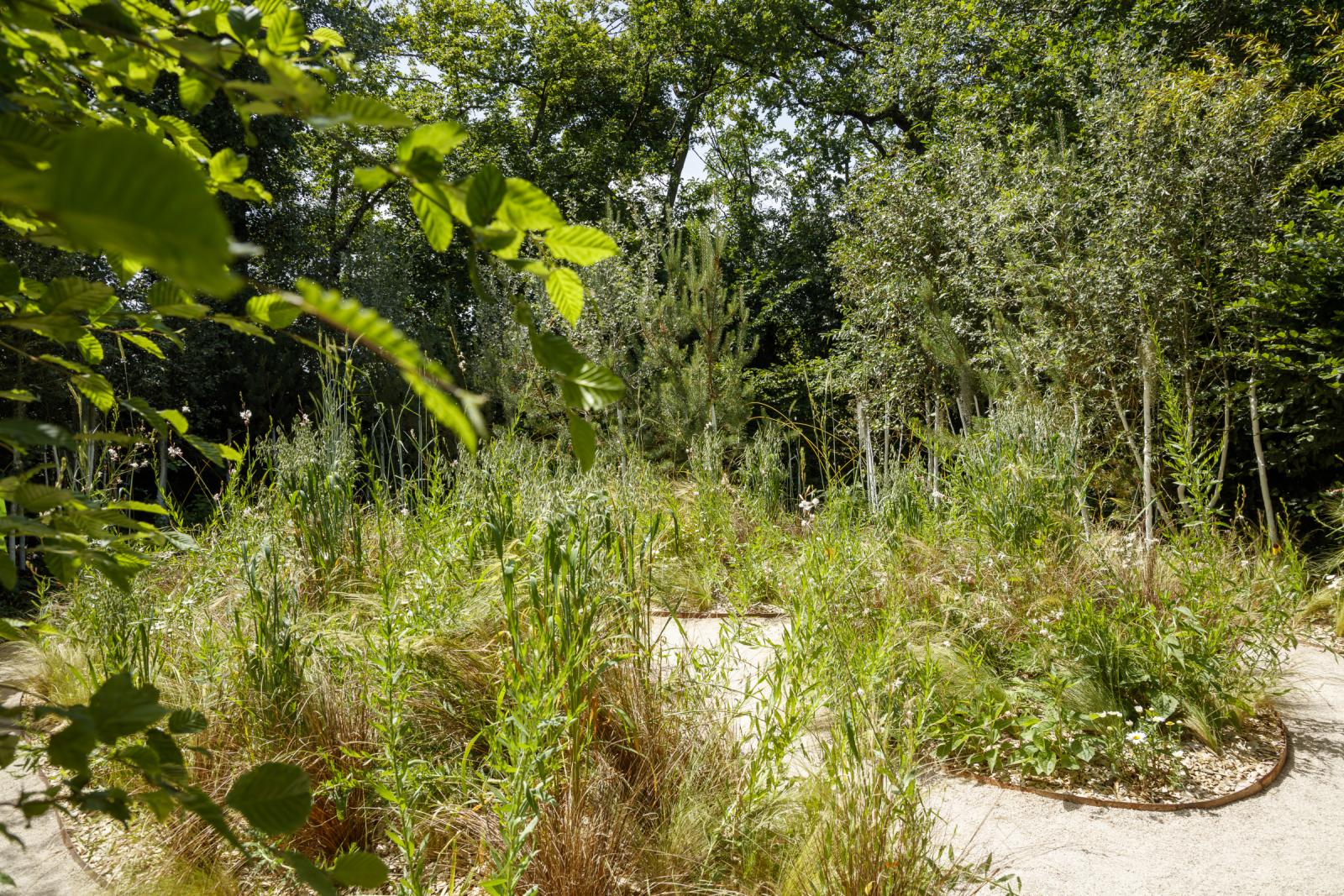
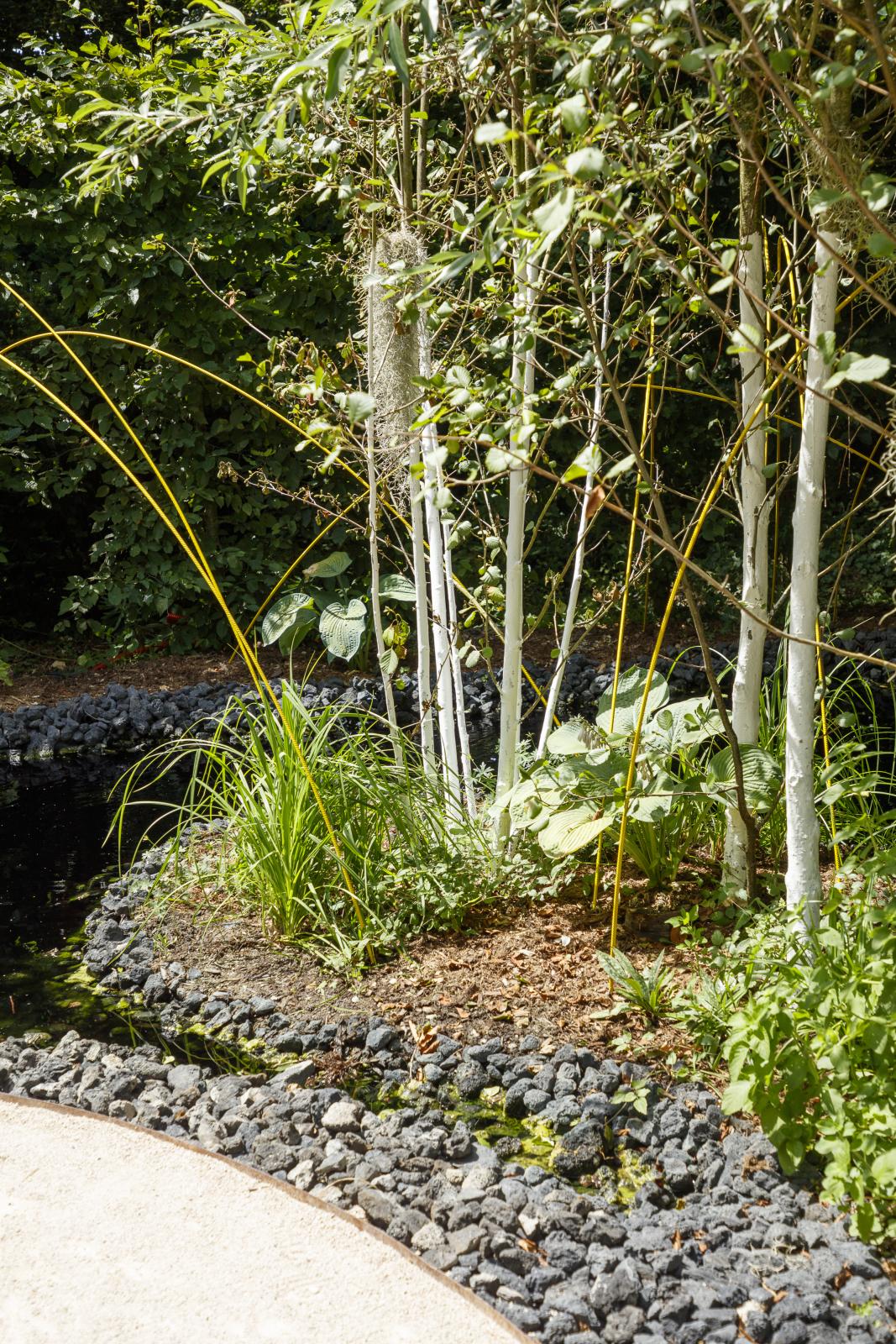
Inspired by Miyazaki’s Japanese animated film Nausicaä of the Valley of the Wind, this garden transforms the dialogue between the ‘toxic’ forest and the Valley of the Wind into a sensory experience. It evokes the fragile but essential connection between Humans and Nature, exploring their relationship and offering the possibility of striking a balance in the way we understand these two entities. Water, as a central element, becomes the common thread here; it links the spaces and flows through them, filtered by the forest, symbolising the renewal of the natural world and the interdependence between the environments.
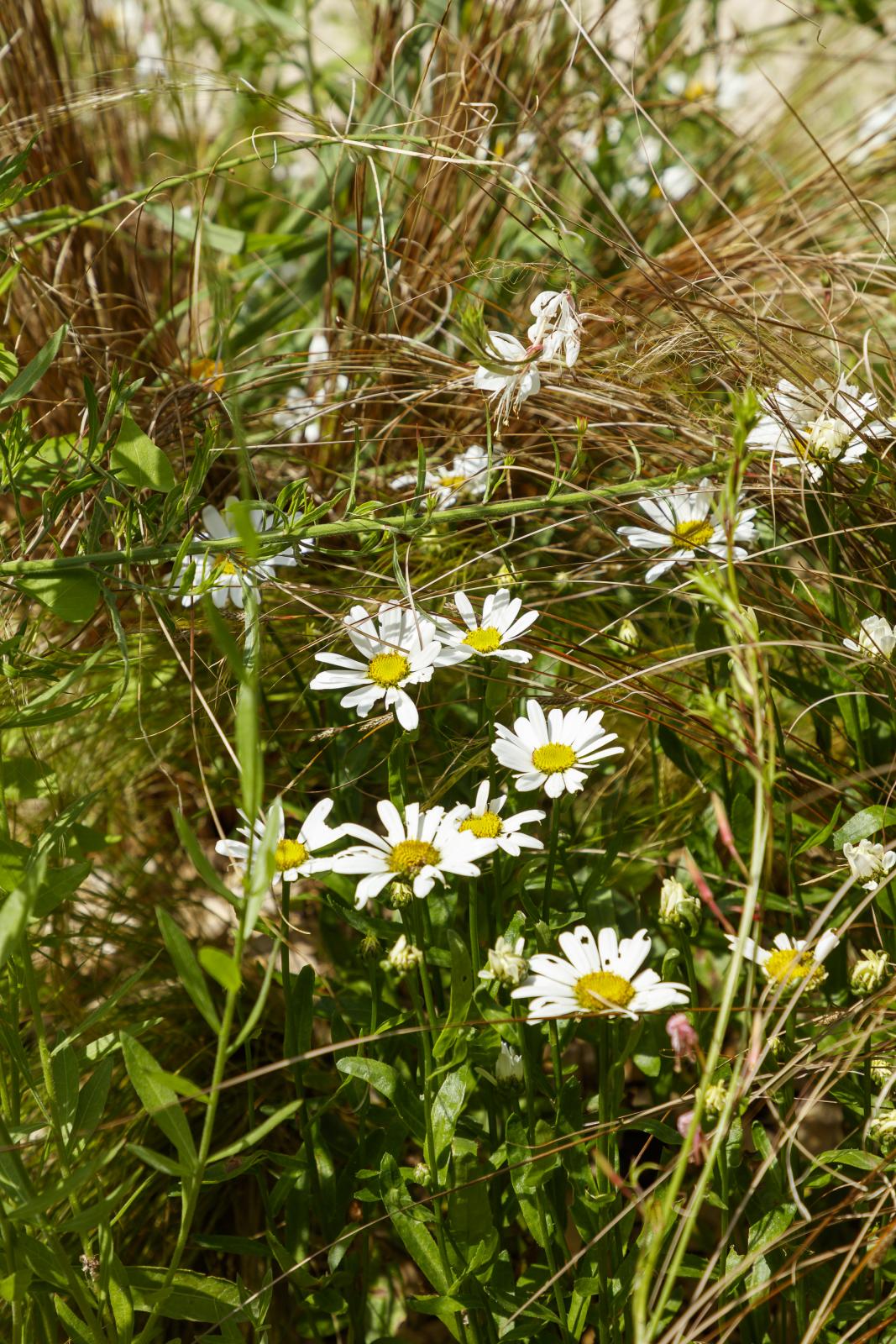
In this garden, as in the film, two worlds collide. The world of the light, bright valley is one of gently rolling terrain, with yellow, gold and white plants, their slender stems lightly caressed by the wind and cane. Princess Nausicaä’s glider sits atop a hillock, invoking the spirit of this guardian of nature, capable of reconciliation and understanding. The valley’s peaceful atmosphere is one conducive to contemplation.
The second world in this dialogue is that of the forest – thicker and more mysterious. It features deep, contrasting tones, dark soil, silvery reflections, pale trunks and white blossoms, evoking the aesthetics of the film. Ponds have formed, holding intensely coloured water that is subsequently purified by the vegetation. The plants here have been chosen for their filtrating, purifying properties. And inhabiting this forest are yellow tentacles reminiscent of those of the Ohmu, the host insects protecting the area.
Rooted in the real challenges of climate imbalance and pollution faced by the Loire Valley, the garden invites us to observe the natural world’s ability to repair and reconcile, and explores water resources in their geographic context. By encouraging us to stroll between these two worlds, it provides something of a poetic crossing, where the garden becomes a place of harmonious co-existence between Man and Nature.
DESIGNERS
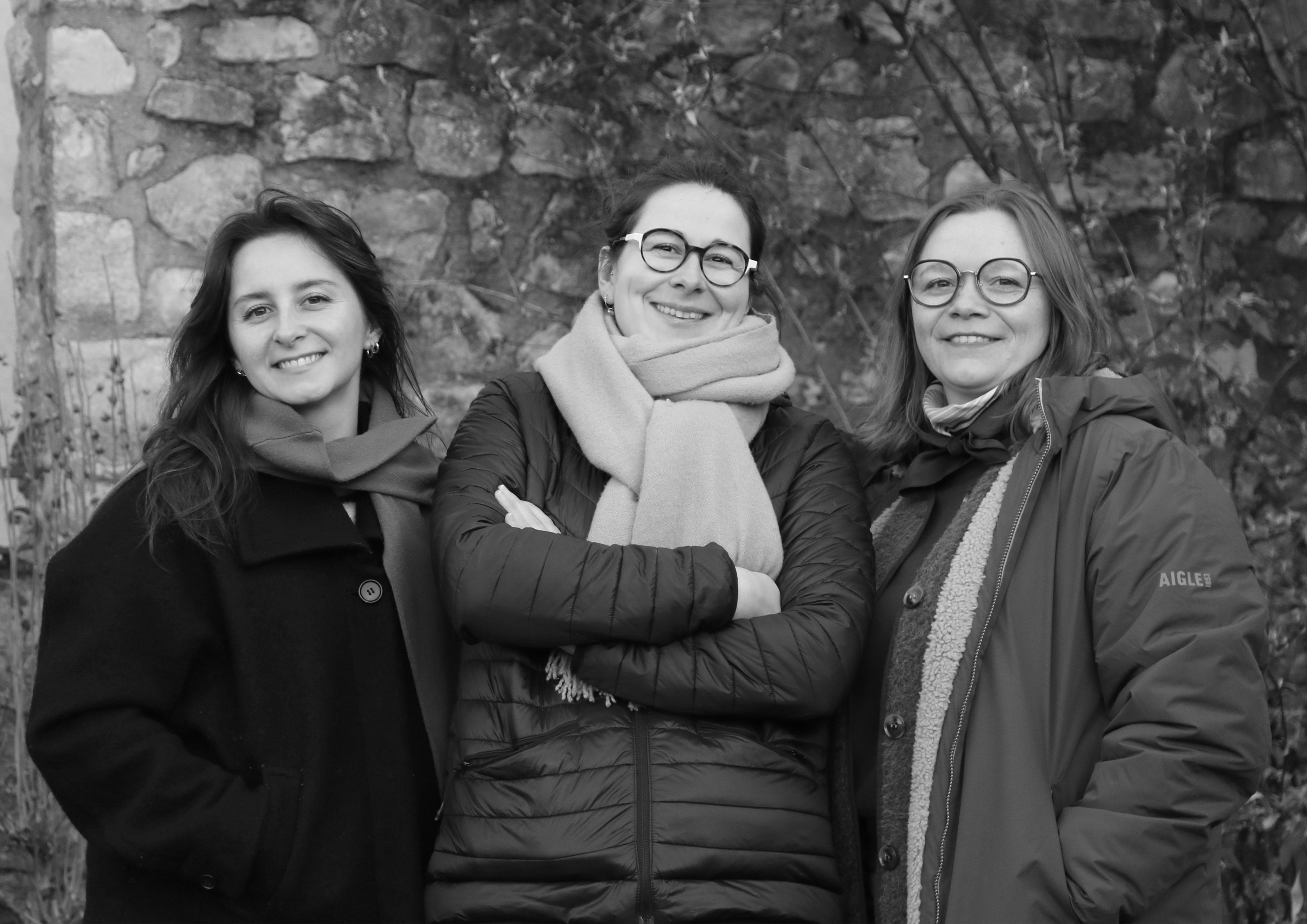
Julia Simonnet is a landscape designer who graduated from the National Higher School of Landscape of Versailles (ENSP) in September 2021 and lives in the Vendée region. Over the course of her studies, she sharpened her awareness of climate change issues, with a particular focus on the living world. She has been working in her landscape design studio 15 Degrés Ouest since 2023, navigating between small and large scales alike, between fine particles and larger territories. Drawing on the specificities and various textures of the sites she is responsible for, her studio focuses on revealing their strengths and potential, in order to provide hands-on support in their future development. For her, the landscape is experienced in situ and projects must create multiple sensitive links and anchor points between human beings and the forms of a landscape that is home to a host of other lives. Her passion for coastal landscapes and her concern for current ecological issues are reflected in her projects, in which she strives to understand the rhythms and movements of the elements and beings that inhabit them. Her approach consists of assisting territories in their unique transformations, whether through public and private design projects, landscape studies, awareness-raising workshops for schoolchildren or educational panels. She also creates art installations in the landscape in order to raise public awareness of living things, movement and future transformations, while renewing the way we look at landscapes and their challenges. She also spent three years working as a landscape design trainer for several organisations, always ready to share her passion and pass on her knowledge.
Chloé Vincent has fond memories of her childhood playground: the family greenhouses, a precious heritage handed down from generation to generation, from her great-grandfather to her father. Her favourite time was when the seedlings were sprouting: she watched in wonder as each seed awakened before plunging her hands in the soil and carefully transplanting them. This intimate contact with the soil and living matter gradually shaped her sensitivity and forged her relationship with the landscape. Initially drawn to the sciences and matter, she finally found what really drove her by reconnecting with the earth. The soil and its fertility became her guides throughout her studies at the National Higher School of Landscape of Versailles (ENSP), in particular through her exploration of the landscape architect’s role in agricultural projects. As a result, she uses the landscape to highlight the wind element, often perceived as a constraint by farmers, and has succeeded in turning this obstacle into so many creative opportunities where each challenge becomes food for thought and source of inspiration. After graduating in 2021, she spent three years working in a landscape design firm, where she developed a sensitive, collaborative approach to projects. She combines co-design, consultation and graphic expression to bring out, structure and express ideas. She currently works in a production company’s design department in close collaboration with site managers, deepening her technical knowledge by following the various stages of the projects she is involved in and working alongside creative teams to bring them to life in the landscape. She is committed to designing and assisting with sustainable projects that are rooted in their regions, respectful of the soil and attentive to usages, the dynamics of living things and local realities.
Manon Vandenbussche is a landscape designer who graduated from the National Higher School of Landscape of Versailles (ENSP) in 2021. Combining the expertise she acquired in various agencies in Paris and Nantes (D'ici Là, Altitude 35 and La Forme et l'Usage), she has developed a concerned, vigilant eye when it comes to understanding landscapes and territories, taking a multiscalar, systemic, narrative approach. Her sensibility is best expressed in the care she takes over the analytical, conceptual and graphic narrative construction of her projects, evidencing an appetite at the crossroads of art and garden history and research. In 2023, she was named Europan 17 winner for the Courcy-Grand Reims site. Entitled Solstice or Le Contrat vivant (The Living Contract), the project made good use of a transcalar approach with the aim of anchoring the living world’s dynamics at every scale of intervention: territorial, urban and local alike. Drawing inspiration from Rousseau's Social Contract, it harmonised human and non-human rhetoric with a view to redefining the notion of the common good for the future of the agricultural park on the former Air Base 112. Her commitment has provided her with opportunities to publish op-eds in national daily newspapers, discuss major climate change issues on various listening platforms and exhibit her research work at the Versailles Biennale of Architecture and Landscape international exhibition. In 2026, she has decided to take a step to one side and develop an activity as artistic director for landscape, urban planning and territorial development firms. Her expertise in design phases, international competitions and competitive dialogues has provided her with a unique graphic sensibility when it comes to projects’ narrative construction and ongoing visual identity. A curiosity fuelled by the ambition to encourage projects designed by everyone for everyone.