04. Paysage-montage
How are films produced? How do you create special effects? How does the magic of cinema use creative geography or artificial landscapes to construct an actual scene? These are all questions Russian filmmaker and theorist Lev Kuleshov pondered in his day (1899-1970). He notably taught Sergei Eisenstein, director of the famous silent film Battleship Potemkin. The Kuleshov effect or “K effect” thus emphasises the importance of editing; the deliberate choice to juxtapose certain angles or shots over others, even influencing the way the actor goes about their work.
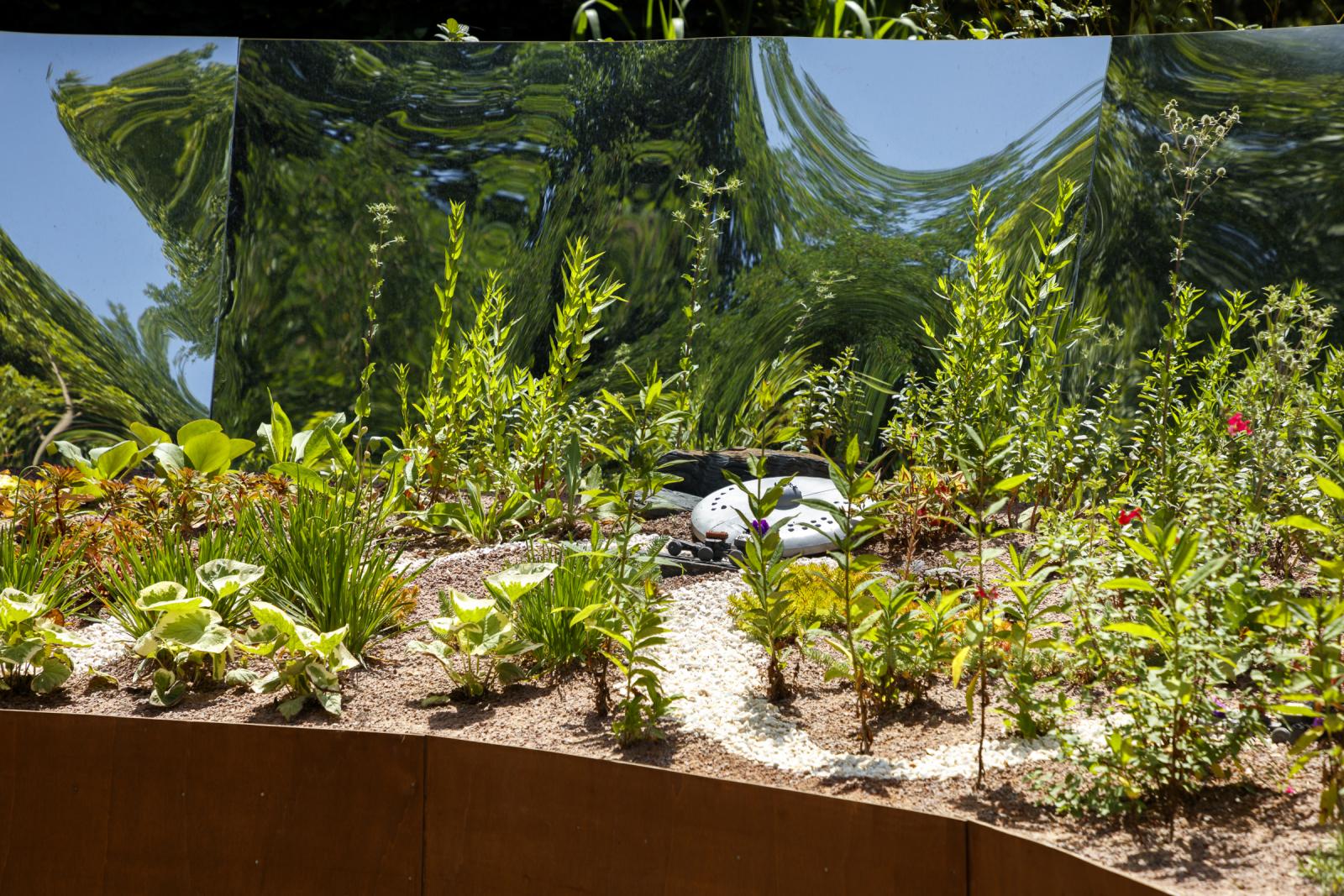
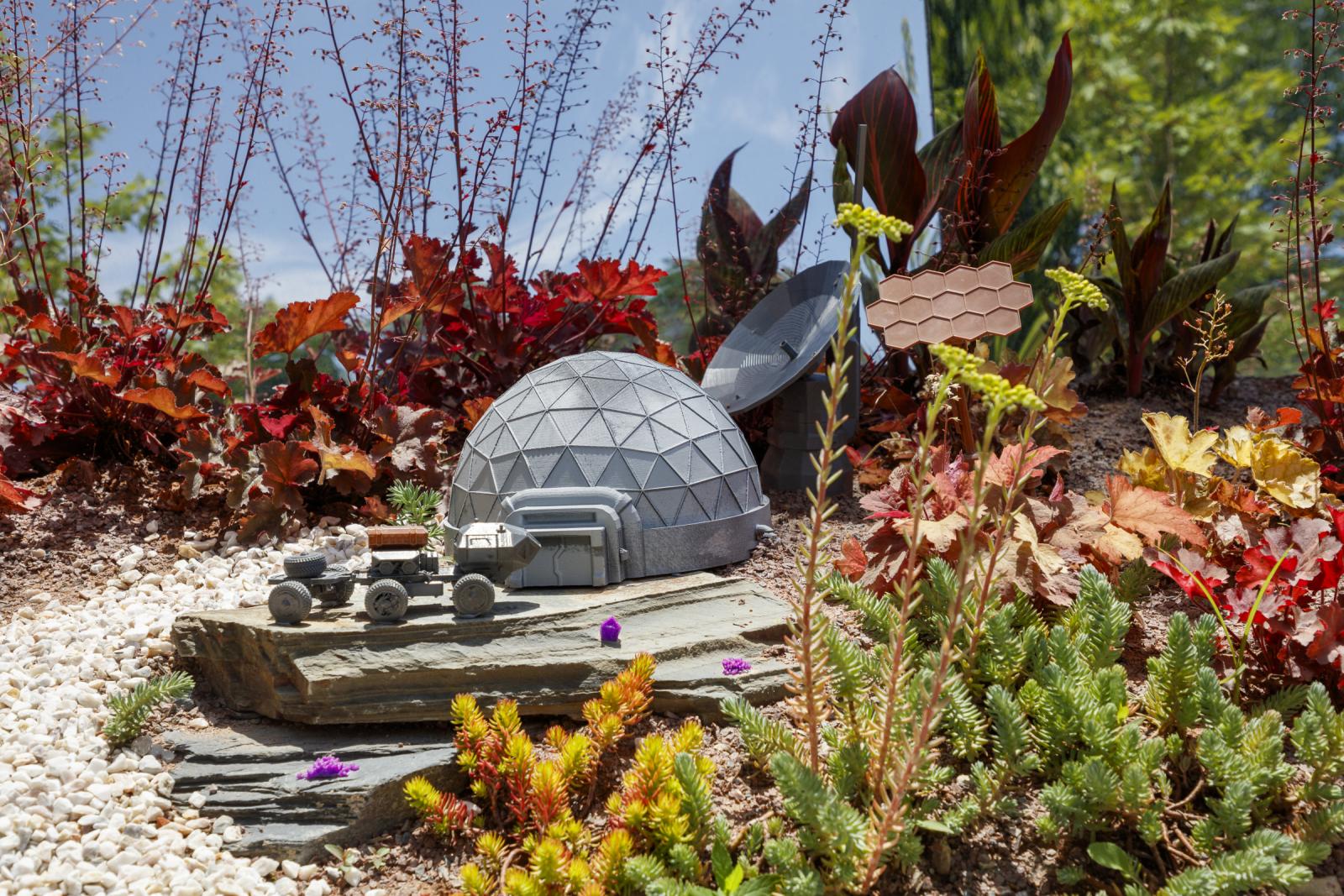
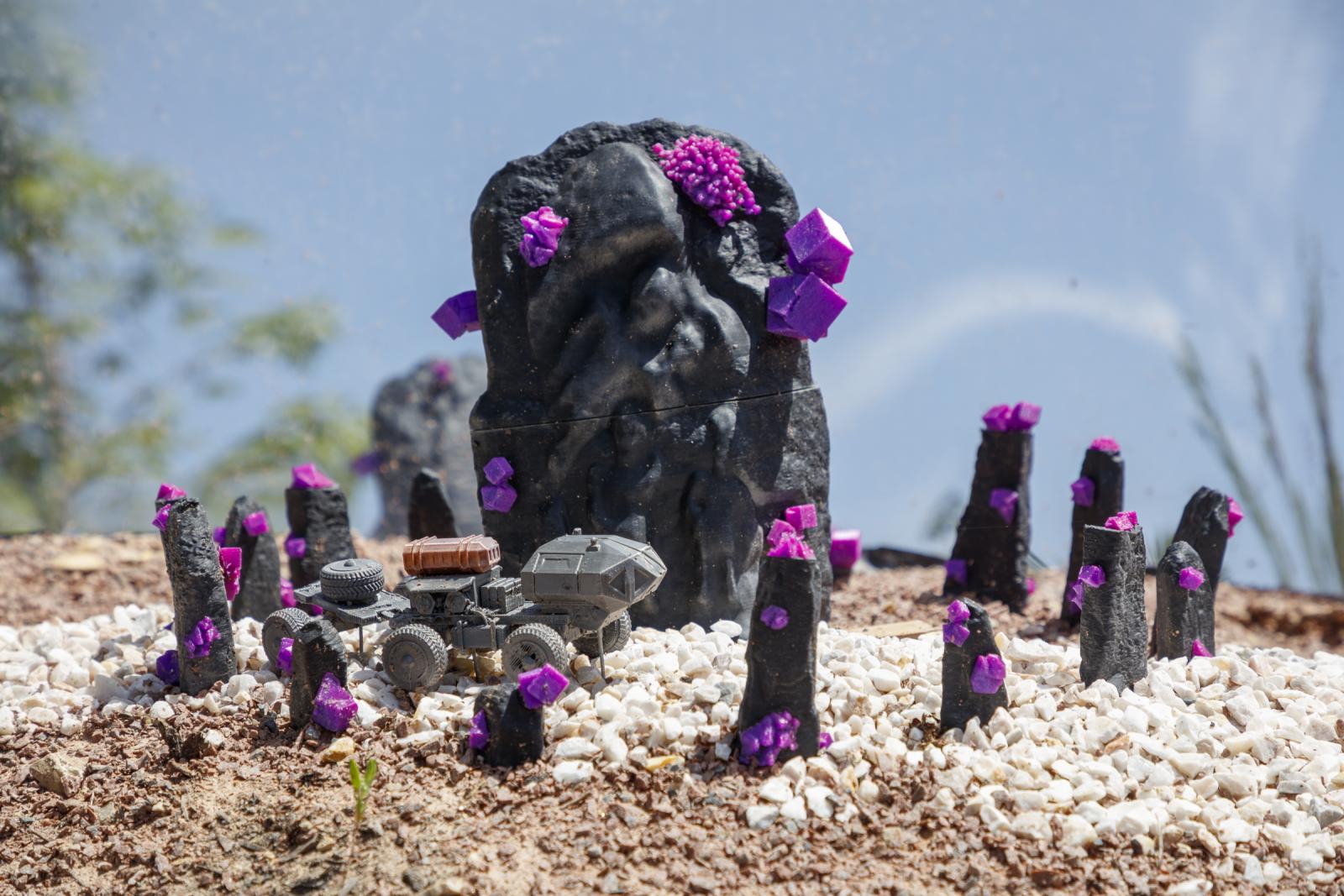
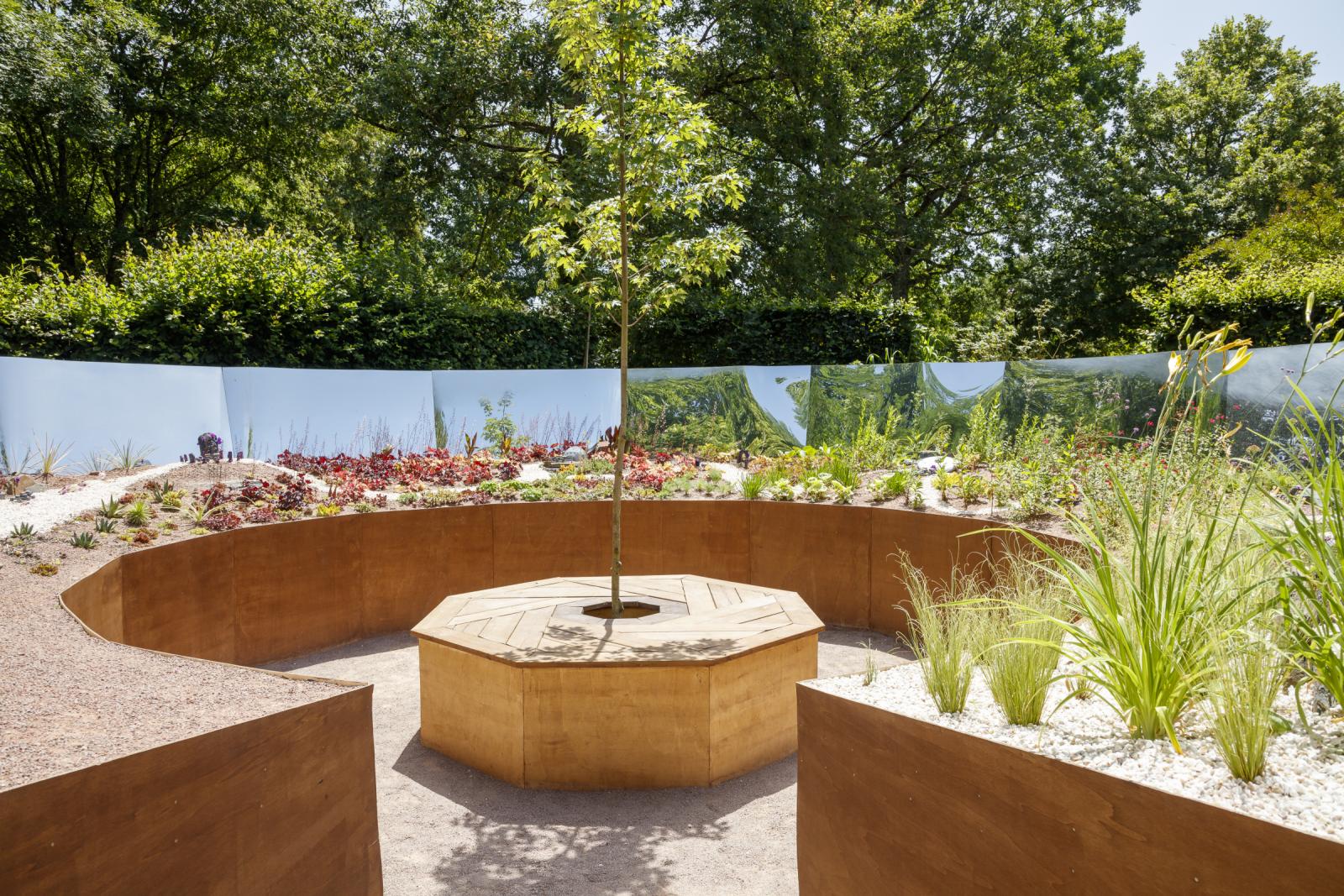
The garden perpetuates this vision, its creative geography enabling a landscape to be created based on editing and mechanical effects; scenes dovetailing into each other, coming together. It is a garden made entirely from scratch, created by the hands of the man building it. The set is assembled and arranged, and the garden appears – the result of a form of cinematographic craftsmanship. It invites visitors to rediscover both the simplicity and complexity of manual work, without any special effects.
The installation seeks to evoke the spatial drama of cinematographic productions, providing an immersive experience. Reflecting on our own scale and perspectives, we can imagine ourselves as both viewer and creator within a living setting. From behind the scenes to the polished image, the garden welcomes everyone as an actor.
And while it is easy to get lost between film and reality, the garden encourages us to take a step back and remind ourselves of the fine line between them. Behind every set is staging; behind every landscape is another landscape, which we often forget. Entering through the backstage, it is no longer possible to ignore the work and richness involved.
DESIGNERS
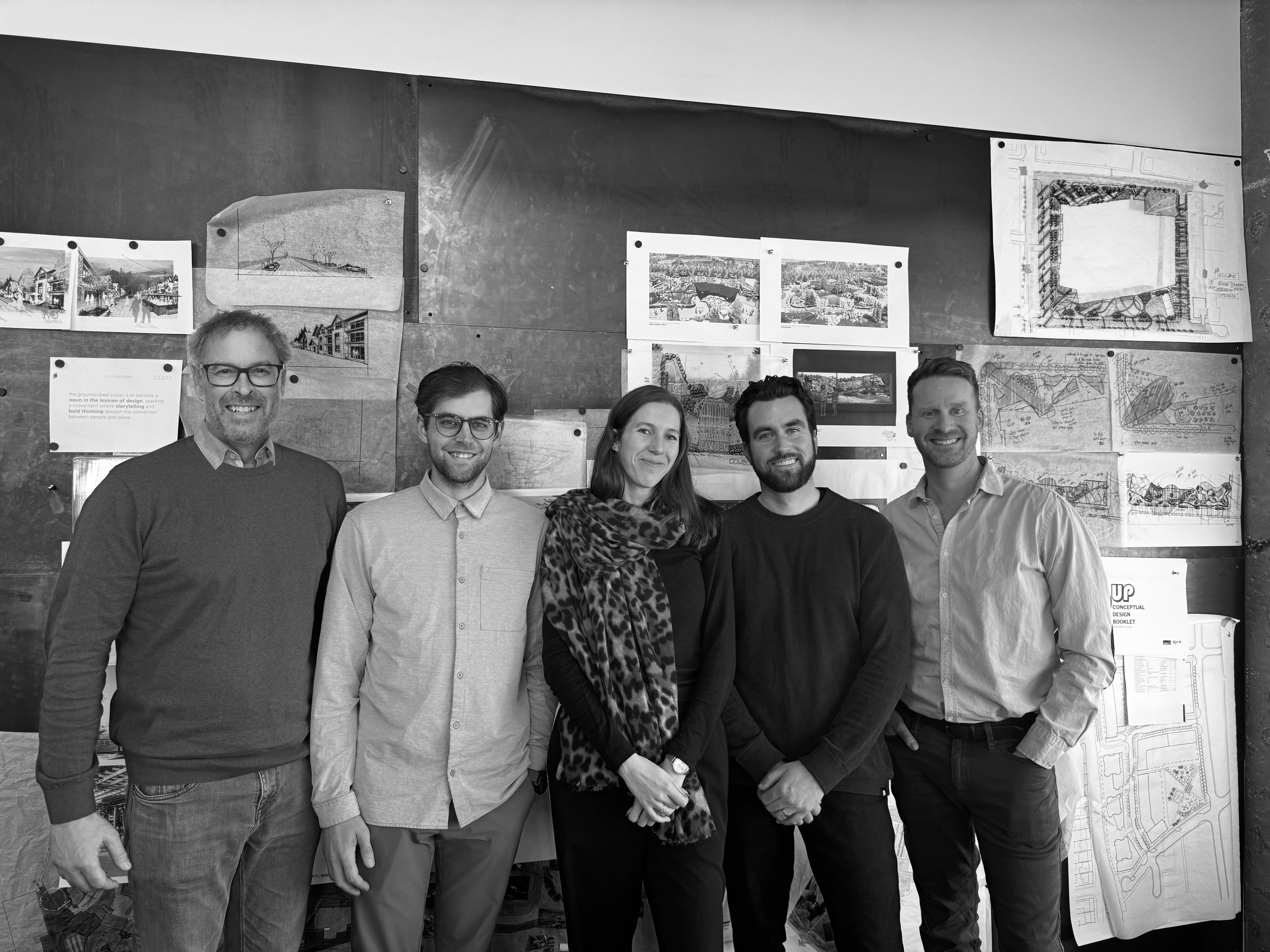
Brendan Lawlor has over 14 years of experience in the industry, with expertise in design as well as digital coordination and implementation. Having spent most of his career within an architecture firm, he has a broad, cross-disciplinary understanding of project phases, enabling him to anticipate how a project will come together on site. Passionate about design in all its forms, he welcomes every challenge with enthusiasm. Whatever the scale, complexity or budget, he champions a thoughtful approach, considered from every angle. He encourages clients and project teams to think outside the box, while staying attentive to industry partners in order to learn and grow. Present at every stage, from initial sketch to site instructions, he ensures the original vision is delivered and that lessons learned inform future projects. His love of design is especially expressed through detail. From the outset, he continually thinks through how a concept can be built, and he can often be found in the workshop resolving technical issues and refining solutions. What he enjoys most is seeing a design through to construction, being part of the implementation team, and getting hands-on in the field.
Greg Stewart is a senior landscape architect with over 25 years of experience in urban design, master planning and landscape architecture. With Groundcubed for more than two years, he has led multidisciplinary teams delivering award-winning projects, placing design excellence at the heart of the process. Comfortable at every scale, from strategic vision and large-scale planning to detailed design and construction oversight, he is committed to excellence at each phase. He mentors and develops his teams, fostering a collaborative working environment that raises the overall quality of design. He also adeptly manages stakeholder and community expectations, meaningfully integrating feedback throughout the process. His work reflects his ability to listen, learn and respond to clients’ and partners’ aspirations as well as their concerns. His passion is also evident in his sketch practice: he quickly draws and illustrates concepts that bring ideas to life.
Jamie Johnson began his design education with an undergraduate degree in industrial design, before working as a graphic and industrial designer within a landscape architecture practice. Immediately captivated by the discipline, he returned to university in 2008 to earn a master’s degree at the University of British Columbia. His interests lie at the intersection of engineering and art, with the aim of creating innovative yet functional spaces. An experienced project manager, he thrives in multidisciplinary teams, particularly on complex operations. He has led a wide range of projects, including commercial programs, multi-family residential developments, urban design and parks. His particular strength is graphic presentation, especially through 3D visualization. He is also responsible for project management, consultant coordination and detailed design. Finally, he oversees drawing coordination and production, ensuring clear organization and rigorous execution at every stage.
Louise Richard graduated from the National School of Landscape Architecture of Versailles–Marseille in 2023, earning the French State Diploma in Landscape Design (paysagiste concepteur). During her studies, she developed a strong interest in the development of natural sites, territorial enhancement, master planning and sustainability, which she consistently integrates into her projects. With an initial background in urban planning, she aims to work at the intersection of urban planning and natural environments. Her experience with heritage gardens has led her to pay particular attention to detail and drawing quality, in service of demanding projects. Curious and committed to continuous learning, she seeks a balance between nature and art in every project. Comfortable both in writing and speaking, she conveys the identity of a place through strong graphic expression and thoughtful design choices.
Tom Brown draws on a multidisciplinary background as a public artist, miniaturist, organic gardener, social media entrepreneur and, more broadly, a creative professional. Through his work, he has seen firsthand the transformative impact of design, especially when it centers creativity, well-being and equity. Informed by his public art practice, his approach reflects a nuanced understanding of how environmental design shapes everyday experience, and of the responsibility to create places that meet the needs of their users, as well as flora and fauna. He has worked on a wide range of projects, including pavilions, cultural centers, large-scale cultural programs, ecological remediation, streetscapes, multi-residential developments and golf courses. Alongside his work, he enjoys spending time in his garden, playing disc golf and being with his family. He designs spaces that can convey the creativity, inspiration and joy he feels when he connects with a place. Grounded in an open, exploratory studio practice, he aims to anticipate challenges and solve issues early on. He is skilled in 3D modeling and in graphic and written communication, and is known for a keen eye for detail. His distinctive perspective, shaped by years of dialogue with the public through art, helps him find unexpected solutions and lead projects with empathy. This outlook supports outcomes where creativity comes first and people’s experiences are thoughtfully and inclusively considered.