06. Le jardin secret de l’Argoat
published at 20/02/2025
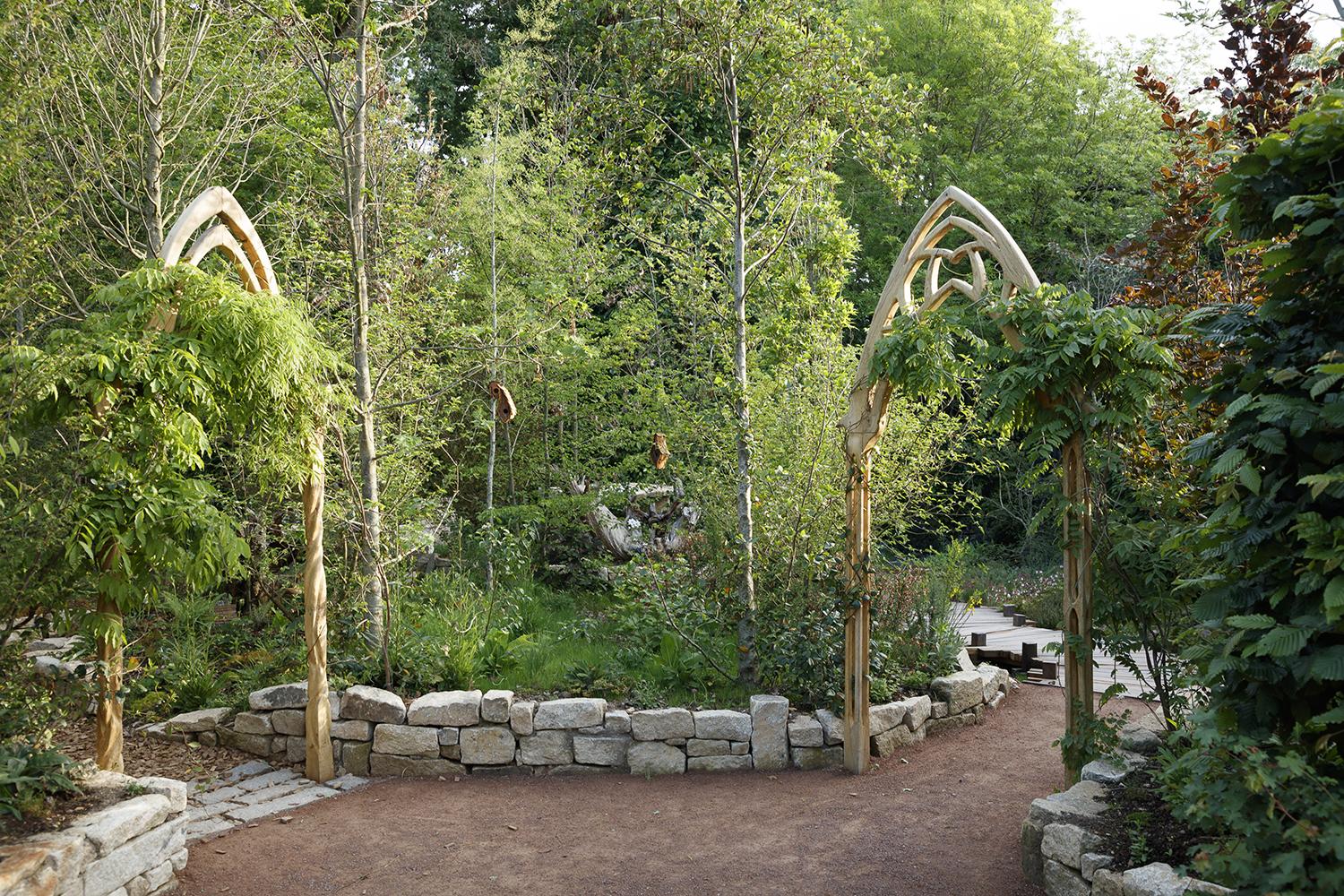
Argoat, or inland Brittany, means ‘wooded land’, and there are indeed woodlands galore, steeped in ancient, unsung legends.
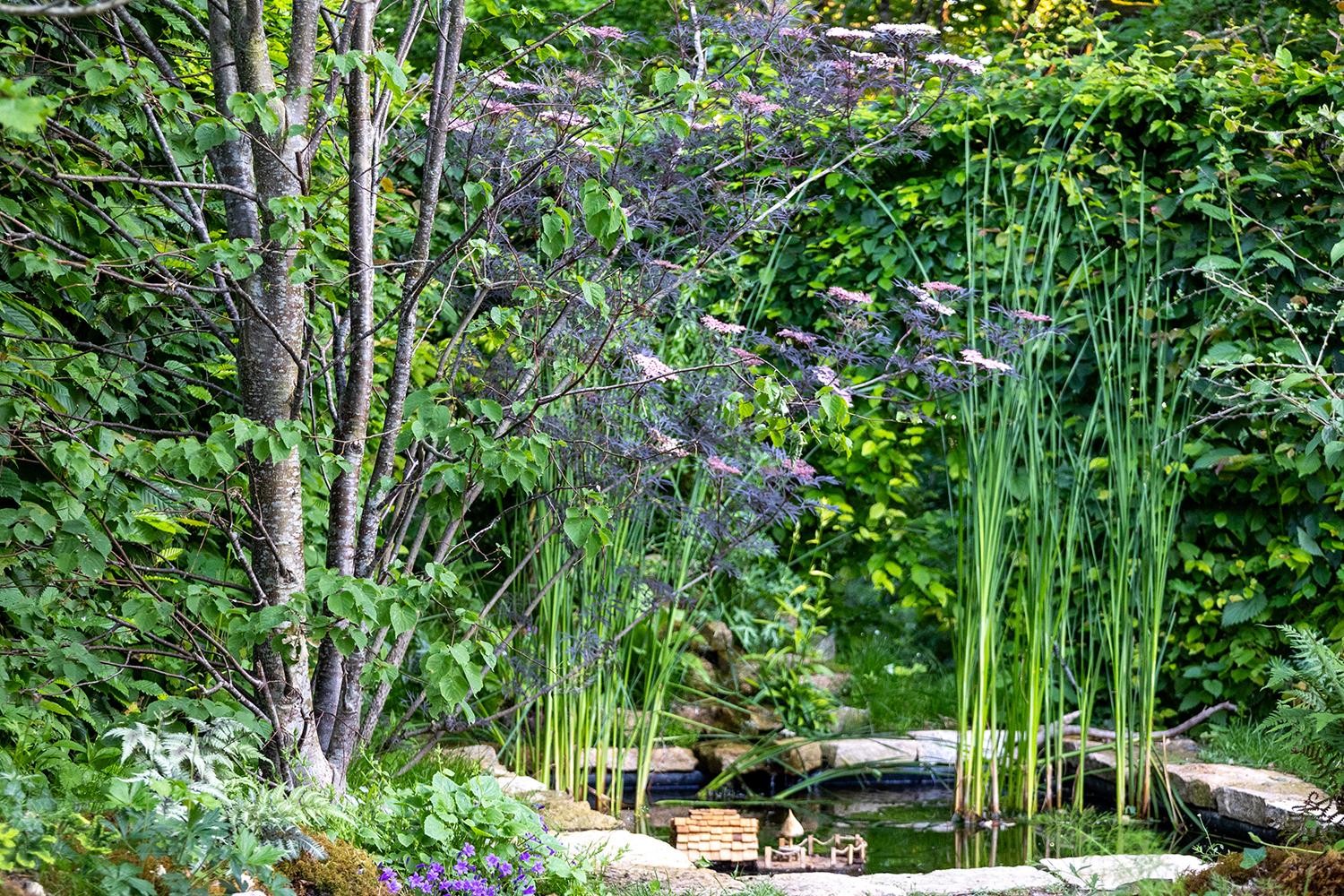
These come to life amidst a mysterious and poetic world of greenery, through trees, moors and stones. The guardians of these natural sanctuaries are spirits whose homes are dotted, inconspicuously, along the path. It is said that korrigans lurk beneath the roots of age-old oak trees or among the carpets of moss. Mischievous elves protect the deep forests. More dainty fairies dance in the clearings dappled with sunlight, visible only to those who approach respectfully and in wonder. Over the windswept moors, the murmuring mist carries with it the breathing of the Bugul Noz, a solitary night figure that watches over the wild expanses, and the shouts of the Courils, who dance with a wicked glint in their eyes.
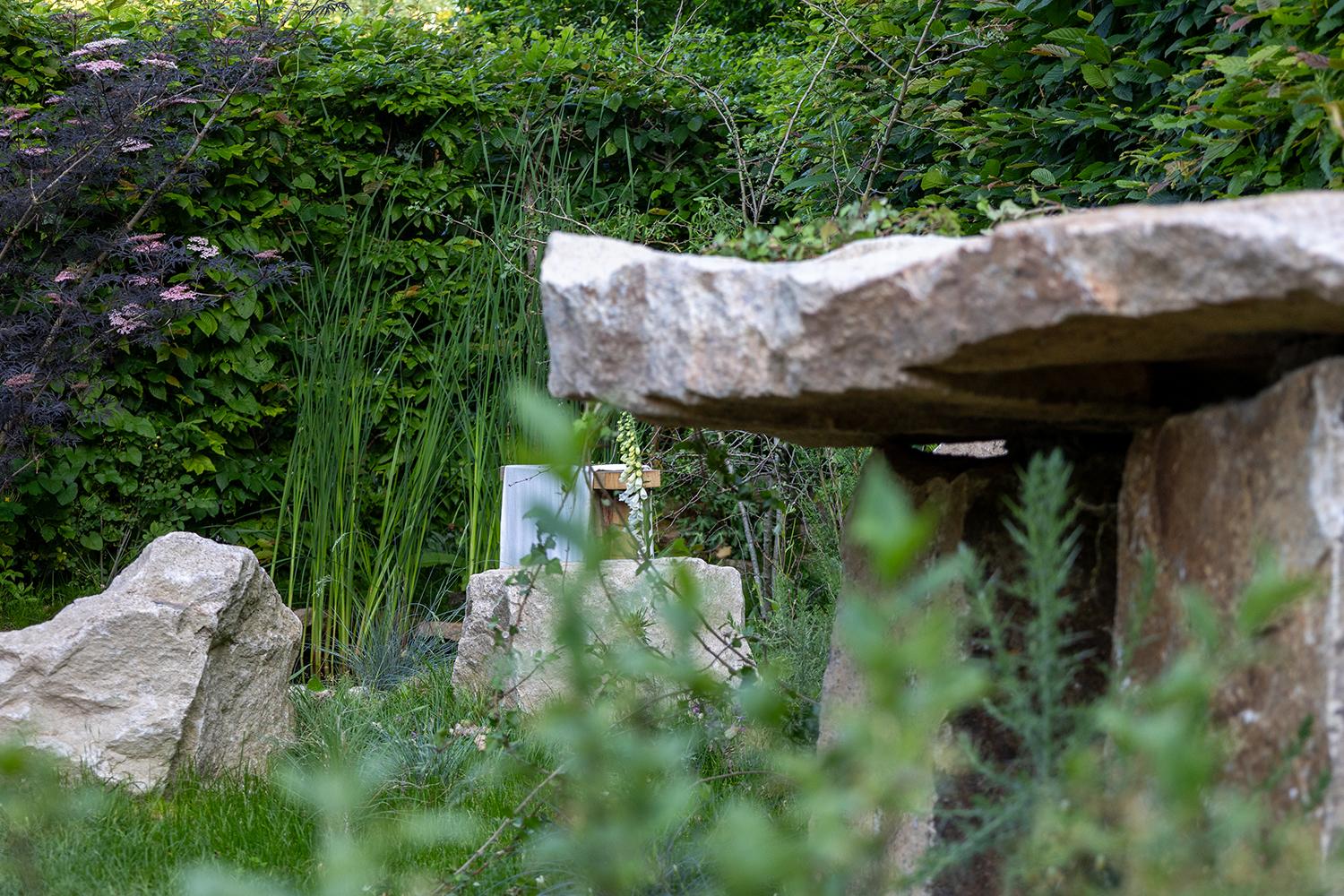
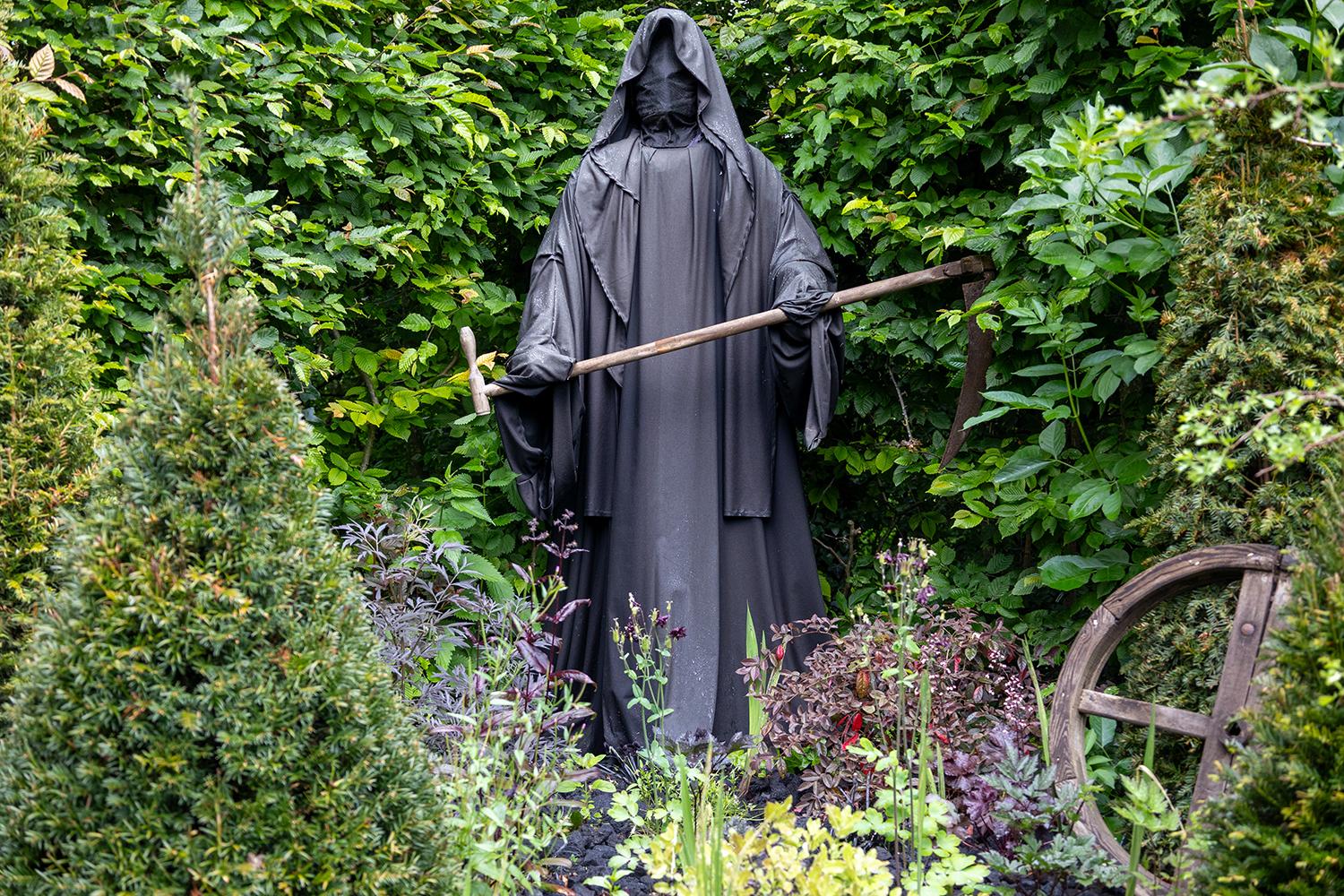
Mythical creatures embody the secret life of places. Do they not reflect the true inhabitants of such landscapes? Small mammals are the custodians of the ecosystem and scurry silently beneath the foliage. Across the moors, the wildlife adapts and blends into the scenery, revealing its presence to those who are observant. Invisible worlds, whether from legend or nature, are no less living for all that. They follow a cycle in which the kingdom of death is but a stage. The dolmen standing in the garden summons the Ankou, one of Death’s henchmen, while a wash-house awaits the ghosts of the night washerwomen.
Brittany’s tales capture the imagination, peopling landscapes with creatures whose habitats must be protected so that the circle of life can continue.
DESIGNERS
PAYSAGE D’EMBRUNS -Romain STIVALA, landscaper-, Charles DEFONTAINE, landscaper
FRANCE
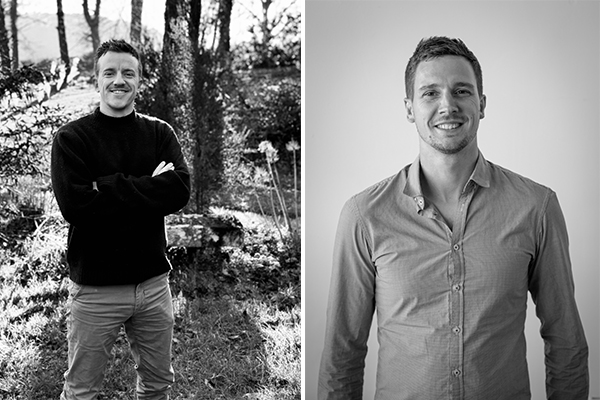
Romain Stivala was not immediately destined for landscaping, although his mother instilled a love of nature in him from an early age. His studies initially focused on animal sciences and ethology. It was not until he was studying in Rennes that he discovered his passion for plants. During his Master's degree, he sought to combine his interests in drawing, architecture and the life sciences, and the discipline of landscape design became an obvious choice, a way of combining art and nature. He pursued a second Master's degree in Angers, at Agrocampus Ouest and the University of Angers, where he deepened his reflection around the connections between humans and their environment, particularly the urban environment. His research into the balance between nature and the city led him to explore ways of reintroducing plants into artificial spaces. In 2017, he joined Topager, a Paris-based company specialising in urban greening, where he contributed to iconic projects such as the Bastille Opera House and the Philharmonie de Paris. In 2022, wishing to reconnect with his Breton roots, he founded the Paysage d'Embruns agency. His approach is based on two principles: a holistic biological vision, favouring the interconnection of living things, and a bioregional approach, focusing on the sustainable use of local resources. His projects are not limited to aesthetics; they aim to offer resilient solutions to environmental challenges, while reconnecting users with nature. He believes that every space can become a refuge for biodiversity and a place of wonde.