17. Cinemazema
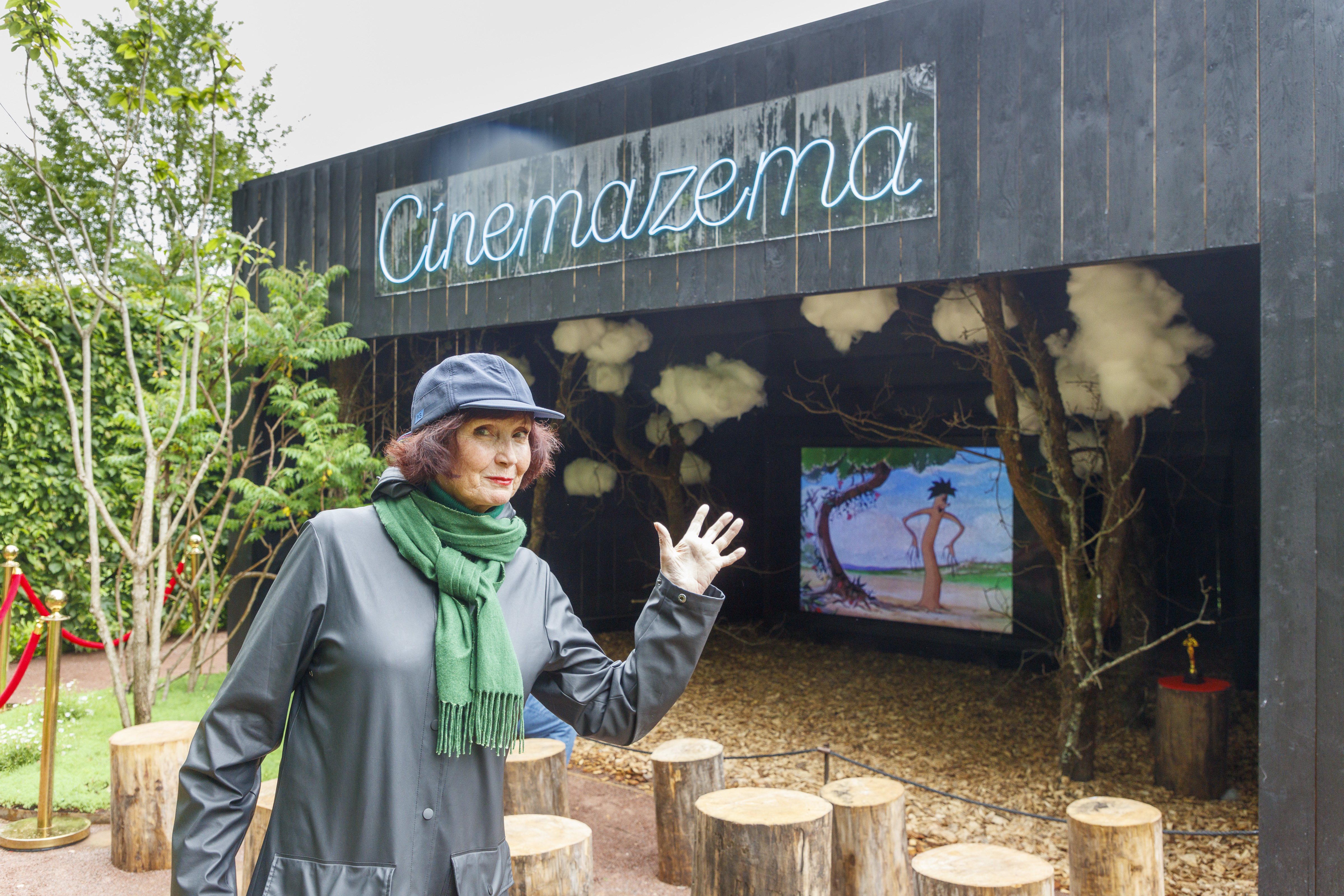
Garden by Sabine Azéma
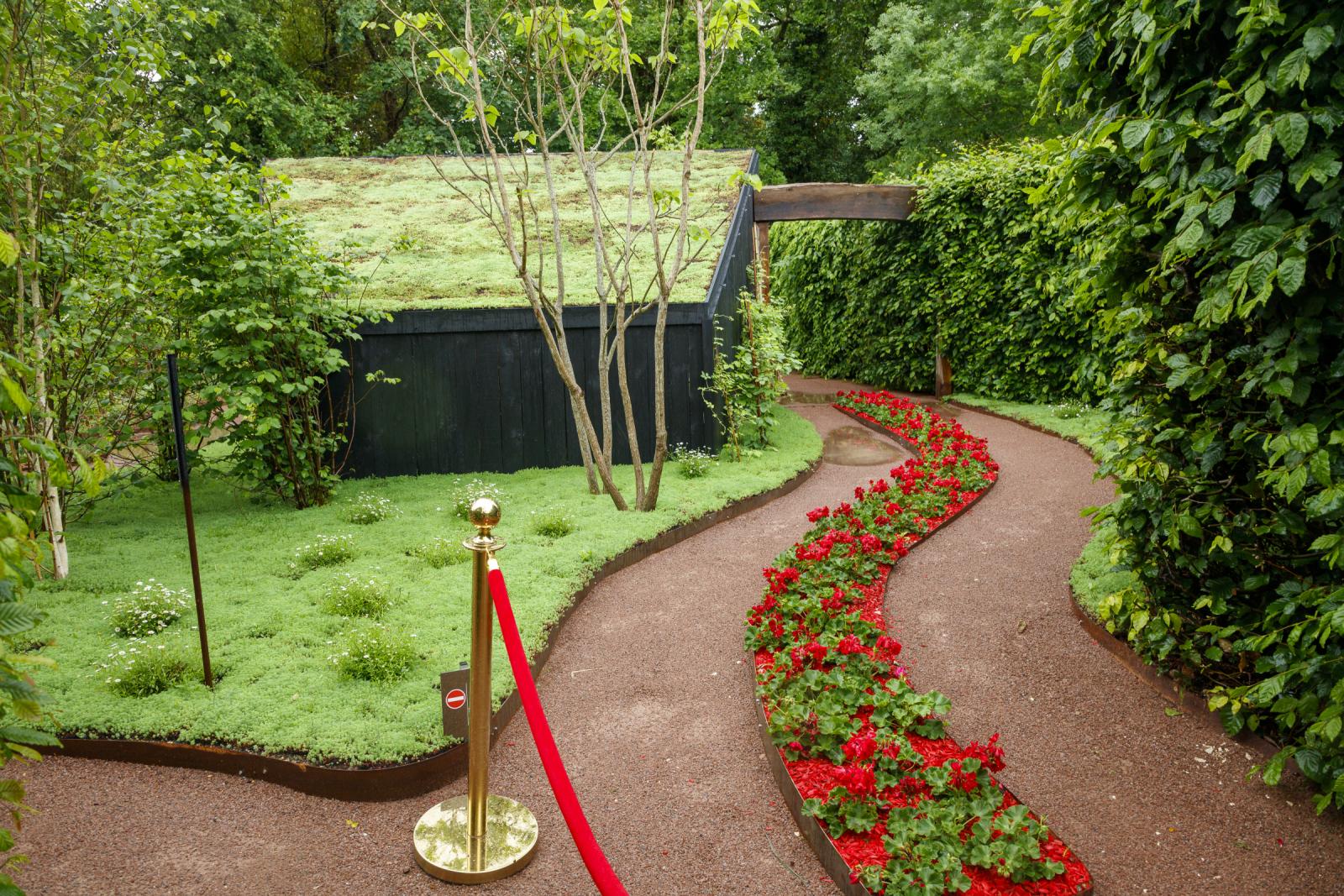
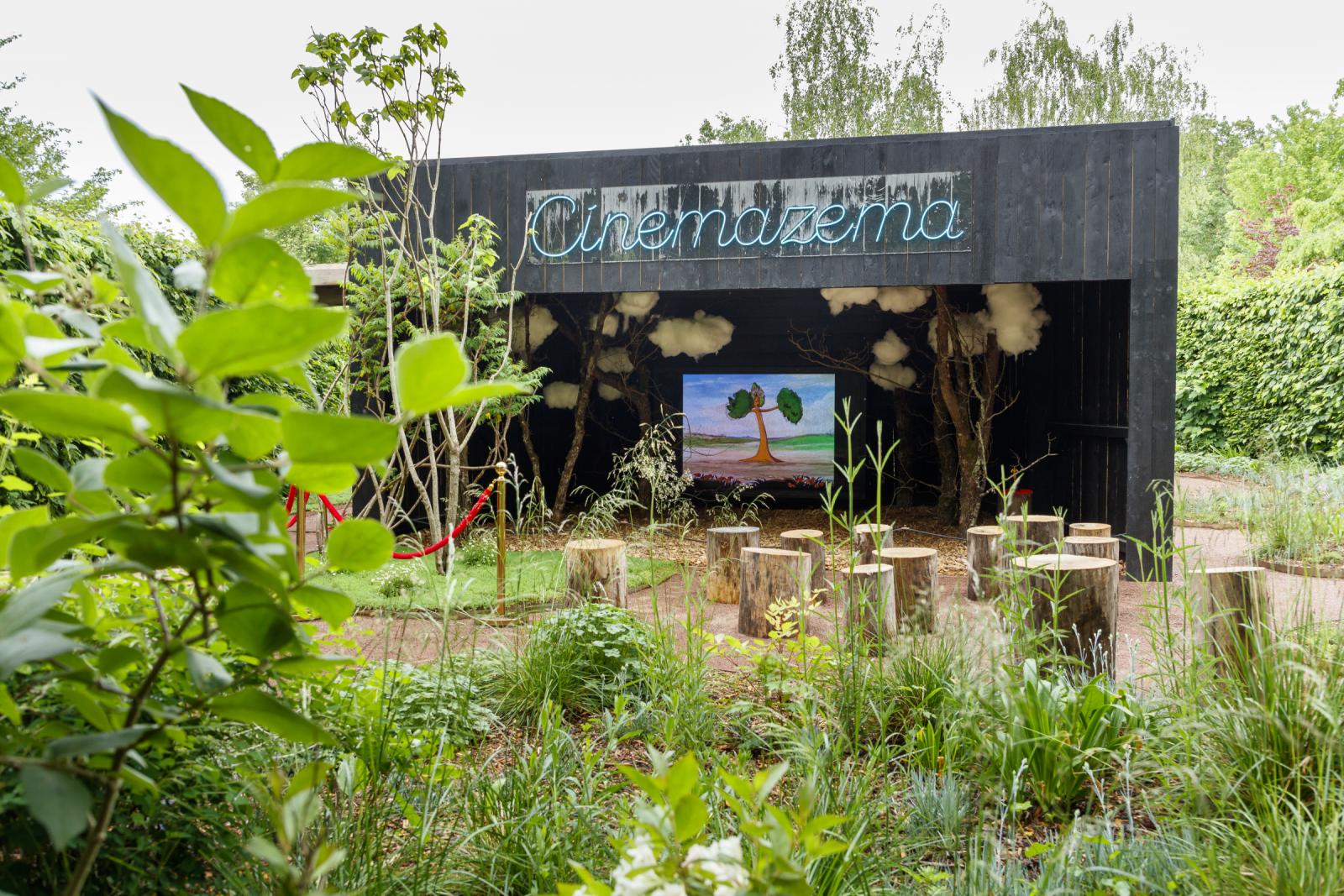
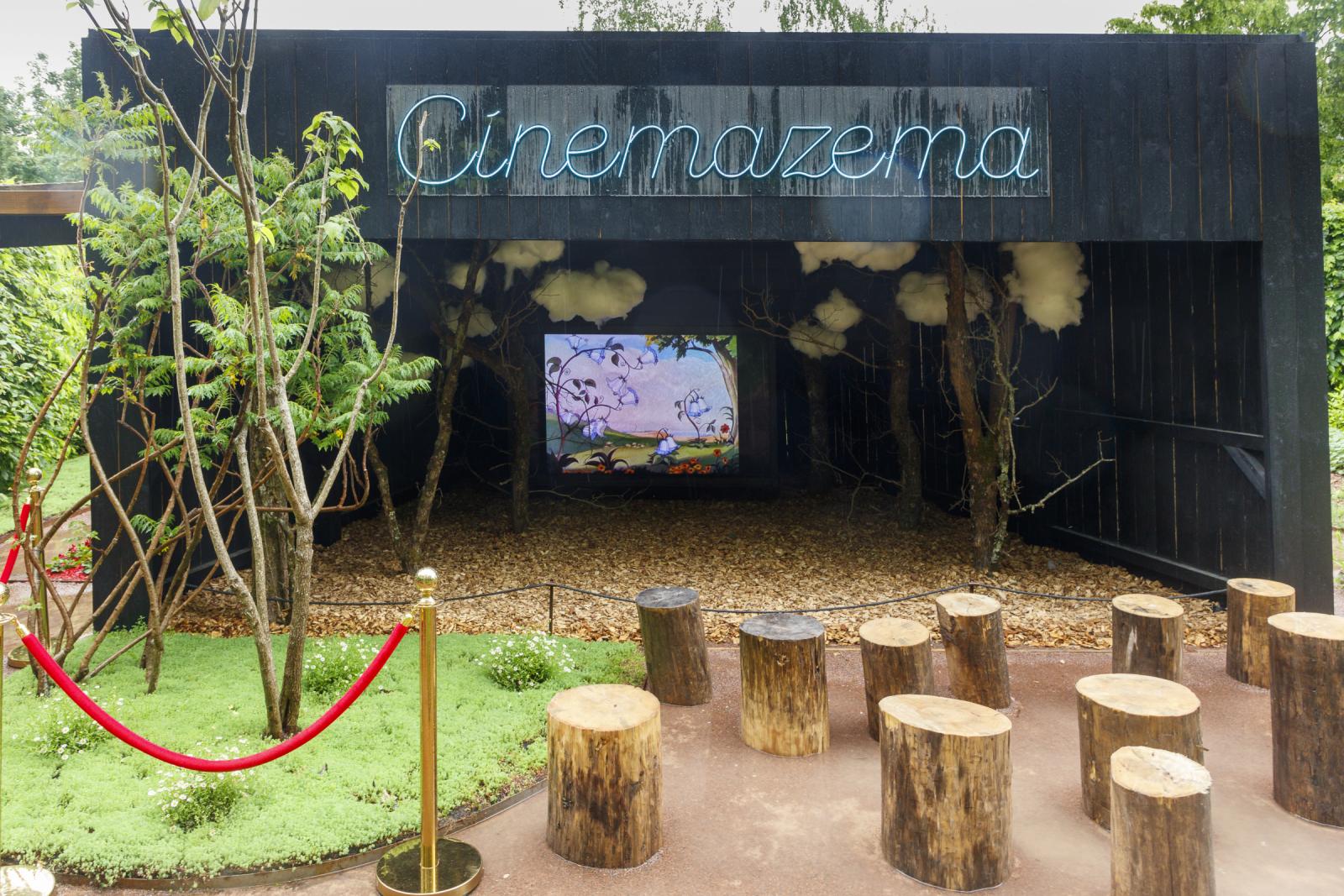
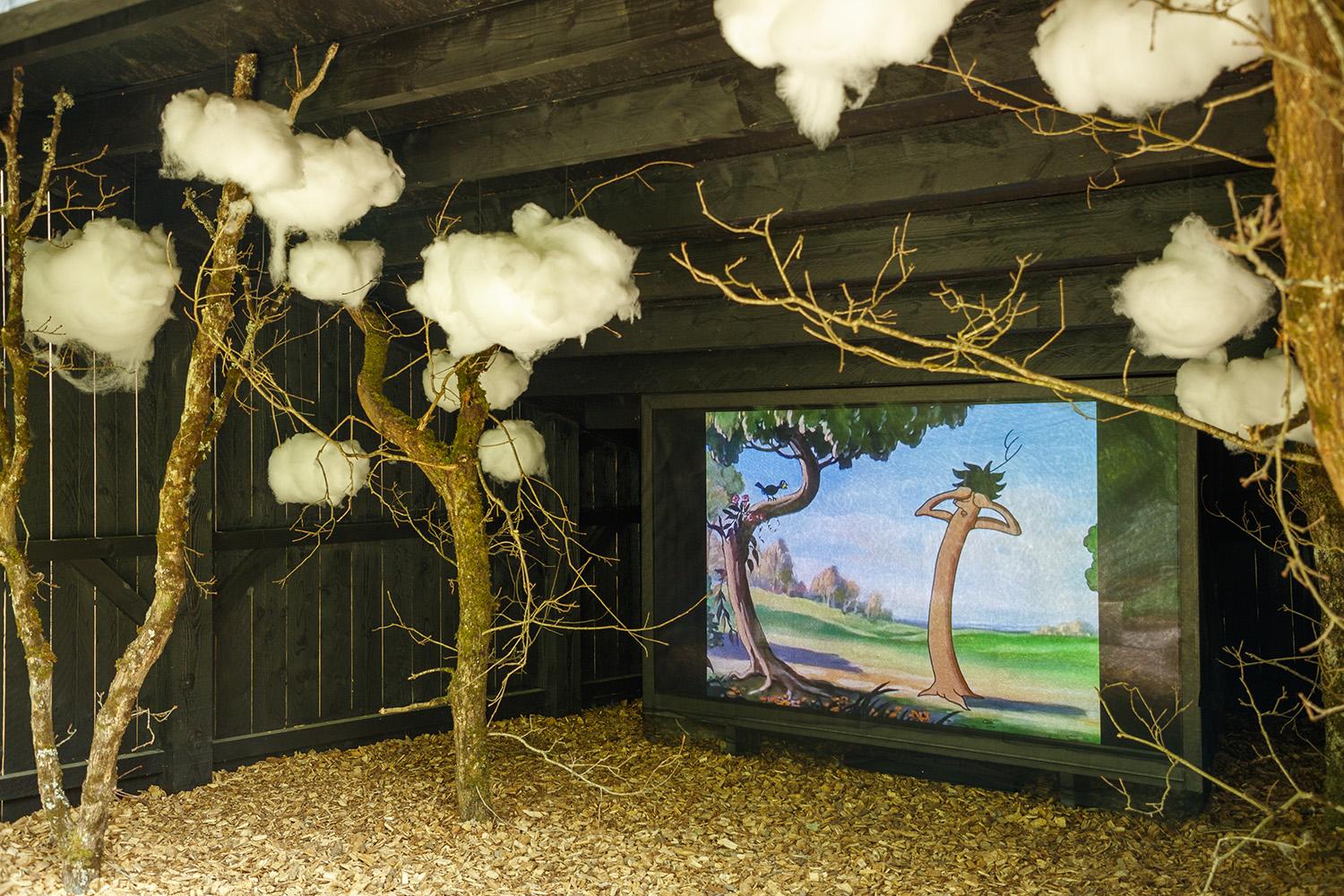
With her characteristic playfulness, Sabine Azéma transforms the garden into a joyful cinema. She draws us into an infinitely poetic and delicate world, with a red carpet of scarlet geraniums and soft sedums cascading down to the roof of the cabin housing the artist's cinema. Her garden offers a moment of respite and reverie amidst flowers and birdsong.
Edmond Rostand
L’Aiglon
Acte V, Scene I
Flambeau
(He plucks a geranium, and with sudden gaiety)
Recipe for changing a vile geranium into a Legion of Honor: pluck three petals!
(He pulls off three petals; the two that remain form a tiny red butterfly; he places it in his buttonhole of his overcoat, saying to it:)
How do you like that on my velvet lapel?
(To the Duke, pointing with his chin to the improvised decoration)
'Tis the very one you gave me, Monseigneur?
The Duke (Melancholy)
I gave it in a dream!
Flambeau
And I wear it in a flower!
Translation by Louis N. Parker (1900)
DESIGNER
Sabine Azéma’s childhood was spent between the Eiffel Tower and countryside, her grandparents living in Sologne. Having attended the French National Academy of Dramatic Arts under the tutelage of Antoine Vitez, she graduated in 1973. She also completed training at the famous Cours Florent. Claude Sainval, director of the Comédie des Champs-Élysées theatre, offered her her first major role in The Waltz of the Toreadors (1974), where she acted as the daughter of the character played by Louis de Funès, performing in front of the play’s creator, Jean Anouilh. She made her television debut in 1975, and her film debut in 1976 in a comedy by Georges Lautner, The Bottom Line, acting alongside Pierre Richard and Jean-Pierre Marielle.
In 1981, she met director Alain Resnais, becoming one of his favourite actresses and muses, and featuring in almost all his films until his death in 2014. The pair married in 1998. The first collaboration saw her nominated for the César Award for best actress in a supporting role for Life Is a Bed of Roses (with Pierre Arditi and Vittorio Gassman) in 1984.
The following year, she received her first César award for best leading actress for Bertrand Tavernier’s film A Sunday in the Country – a feat that would be repeated in 1986 for Alain Resnais’ Mélo. She was nominated in this category once again in 1989 for Jacques Demy’s Three Seats for the 26th, in 1993 for Alain Resnais’ Smoking / No Smoking and in 1998 for Alain Resnais’ musical comedy Same Old Song.
Her comic talent was similarly on display in Etienne Chatiliez’s films Happiness Is in the Fields in 1995 (alongside Eddy Mitchell) and Tanguy (with André Dussollier) in 2001, and in the Larrieu brothers’ films Le Voyage aux Pyrénées in 2008 (with Jean-Pierre Darroussin and Philippe Katerine).
A friend of photographer Robert Doisneau (1912-1994), she paid tribute to him in the 1992 film Bonjour Monsieur Doisneau ou Le photographe arrosé, which she directed herself. Split into five whimsically titled chapters, the documentary touches on his life, his works and subjects such as the Paris light, bar regulars and beautiful women. It reflects the pairs’ bond by playfully reviving the genre of artist portraits. Its title itself is a nod to the origins of cinema, with Tables Turned on the Gardener directed by Louis Lumière in 1895 — initially entitled Le Jardinier et le petit espiègle (The Gardener and the Little Mischief-Maker) then Arroseur et Arrosé (The Sprinkler and the Sprinkled) — considered to be the first ever fictional film on the history of cinema. It was also the first ever comic film.
In an article published in Le Monde in April 2024 to mark the release of Ivan Calberac’s film Riviera Revenge, journalist Vanessa Schneider ‘revisited the origins of Azéma’s eternal zest for life.’ Sabine Azéma revealed that ‘I would never have got to where I am if I hadn’t loved playing around so much. For as long as I can remember, I’ve always been playing around. As a child, I would invent stories, I would write, I would assign roles to my classmates or, at home, to my two younger sisters. (…) role-playing isn’t necessarily about being an actor, it’s a way of existing in the world, of wanting to surprise others. That could be, for example, hiding behind a tree to surprise someone and making them start.”