23. Le jardin de Truman
The True Man Sows

The subtitle of this garden is ‘The true man sows’. The garden harks back to the cult film The Truman Show (Peter Weir, 1998), whose main character, Truman Burbank, is played by actor Jim Carrey. Unaware he is the star of a reality television show, Truman gradually comes to realise he is living an illusion. Evoking several key points of this journey, the garden encourages a different, environmental realisation, placing humans and their actions at the centre of the storyline.
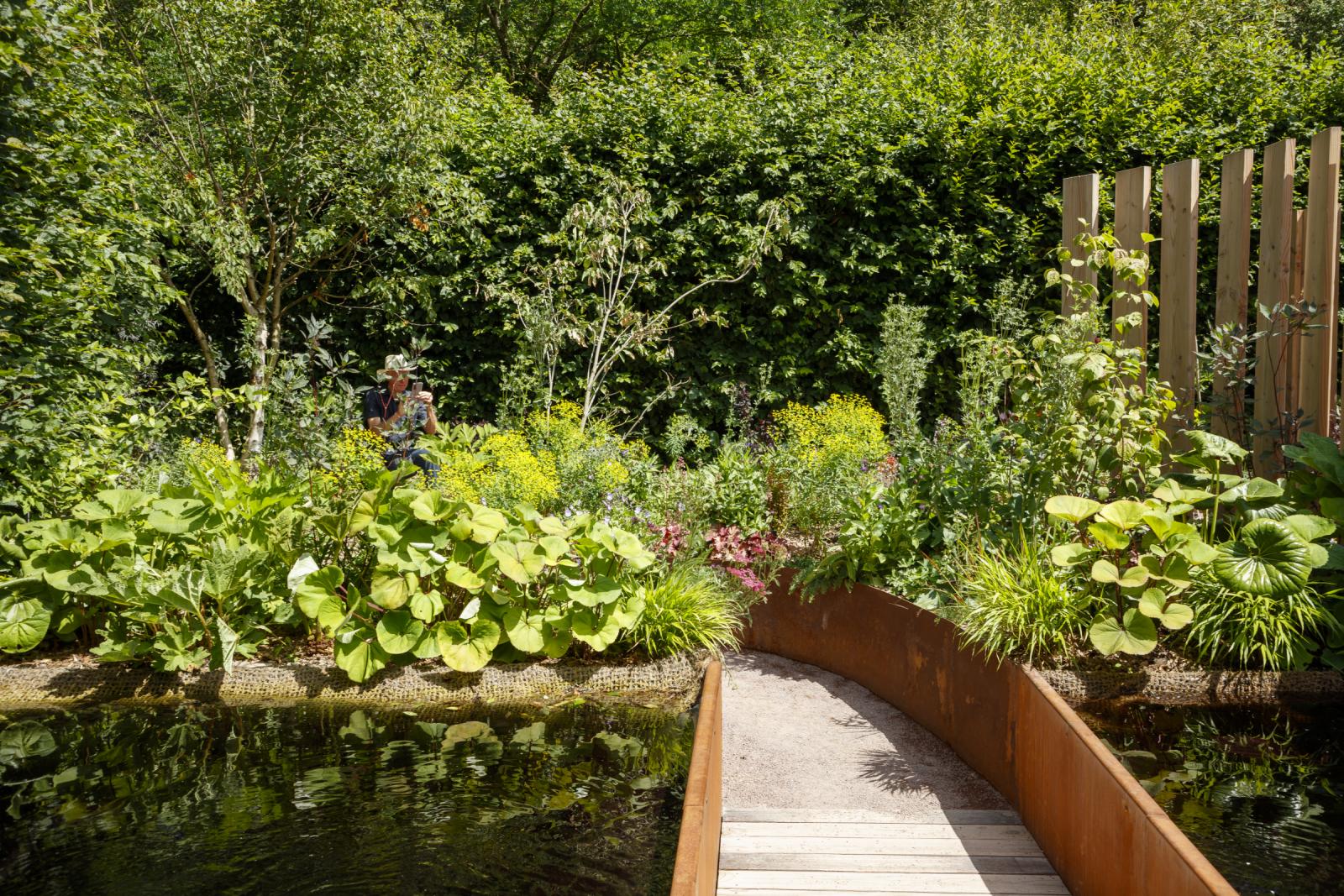
Just like the film, the garden starts in controlled, geometric environment where nothing is out of place – a space with a classic, reassuring vibe and regular paving, but dubious superficiality and anachronism. Inconsistencies soon start to surface, and the path crumbles away, not unlike Truman’s reality. Is there a way of living, of tackling the garden, in a less artificial manner? While the main character thinks they have free choice, they find themselves at an impasse.
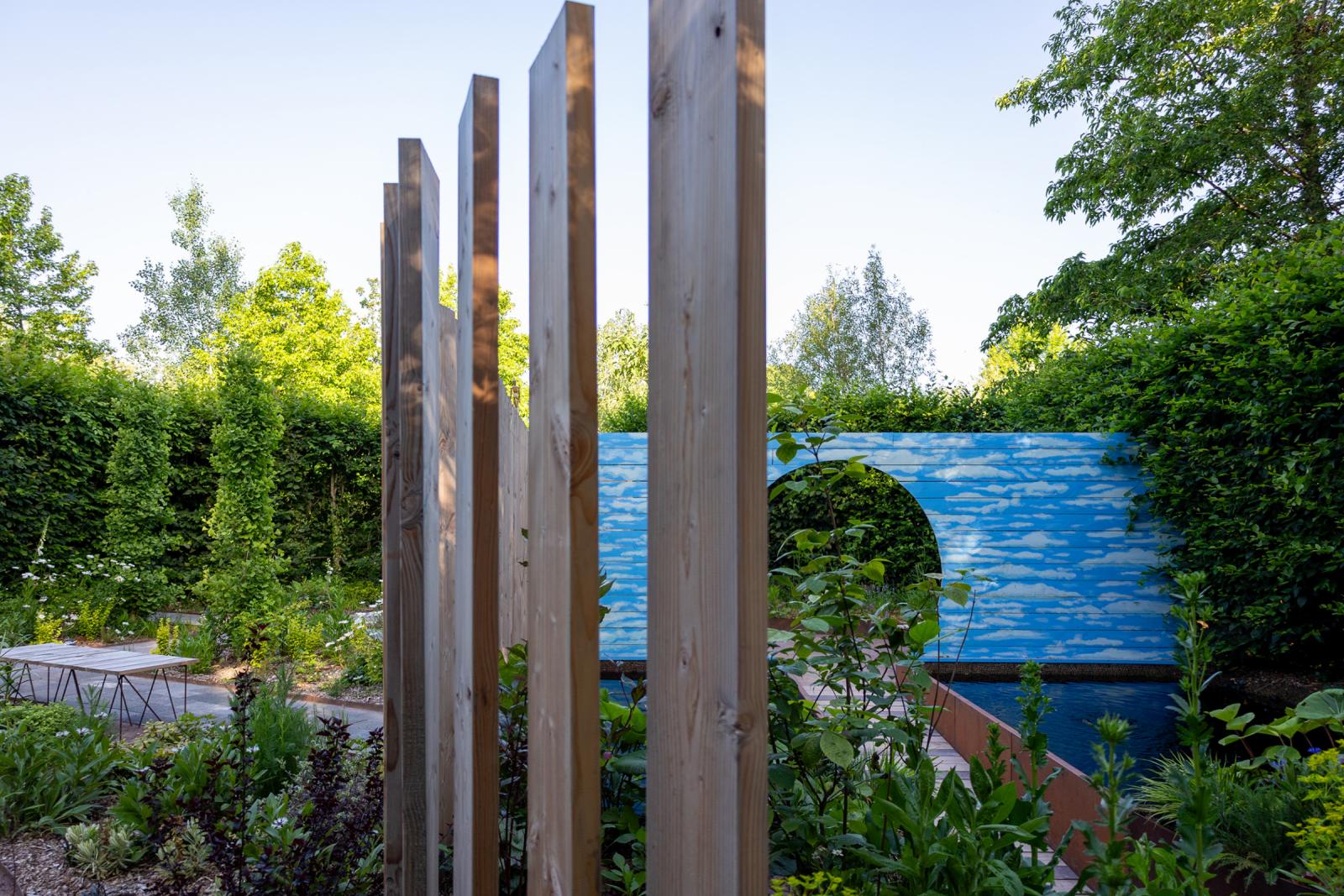
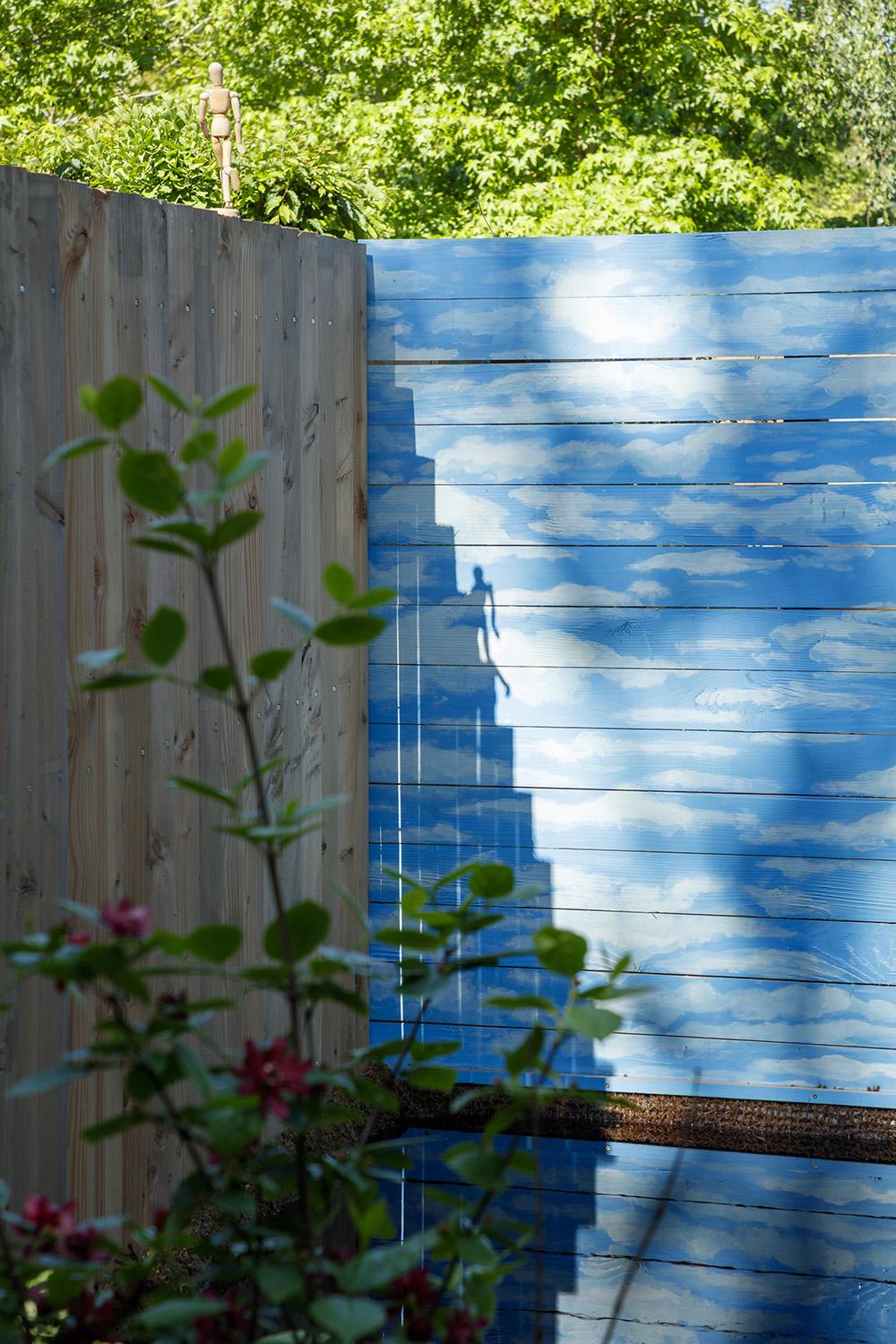
An opening in the set invites visitors to escape into freer, more interesting vegetation. Truman tries to leave his island and cross the sea in search of truth, before reaching another boundary: the end of the world holding him in. The sky is simply a painting on a wall. A few steps carved into it are enough to take him to a door.
That is where the film ends, leaving the audience to imagine what happens next. What will the main character discover beyond the moon-shaped door? It is a question that remains unanswered for Truman, but to which the garden offers its own interpreted response: the possibility of choosing one’s own way in a state of full awareness. Alternatives exist, whether it be in terms of plants grown, maintenance methods employed or reuse practices applied, to allow the garden to once again evolve, surprise and align with those living in it.
DESIGNERS
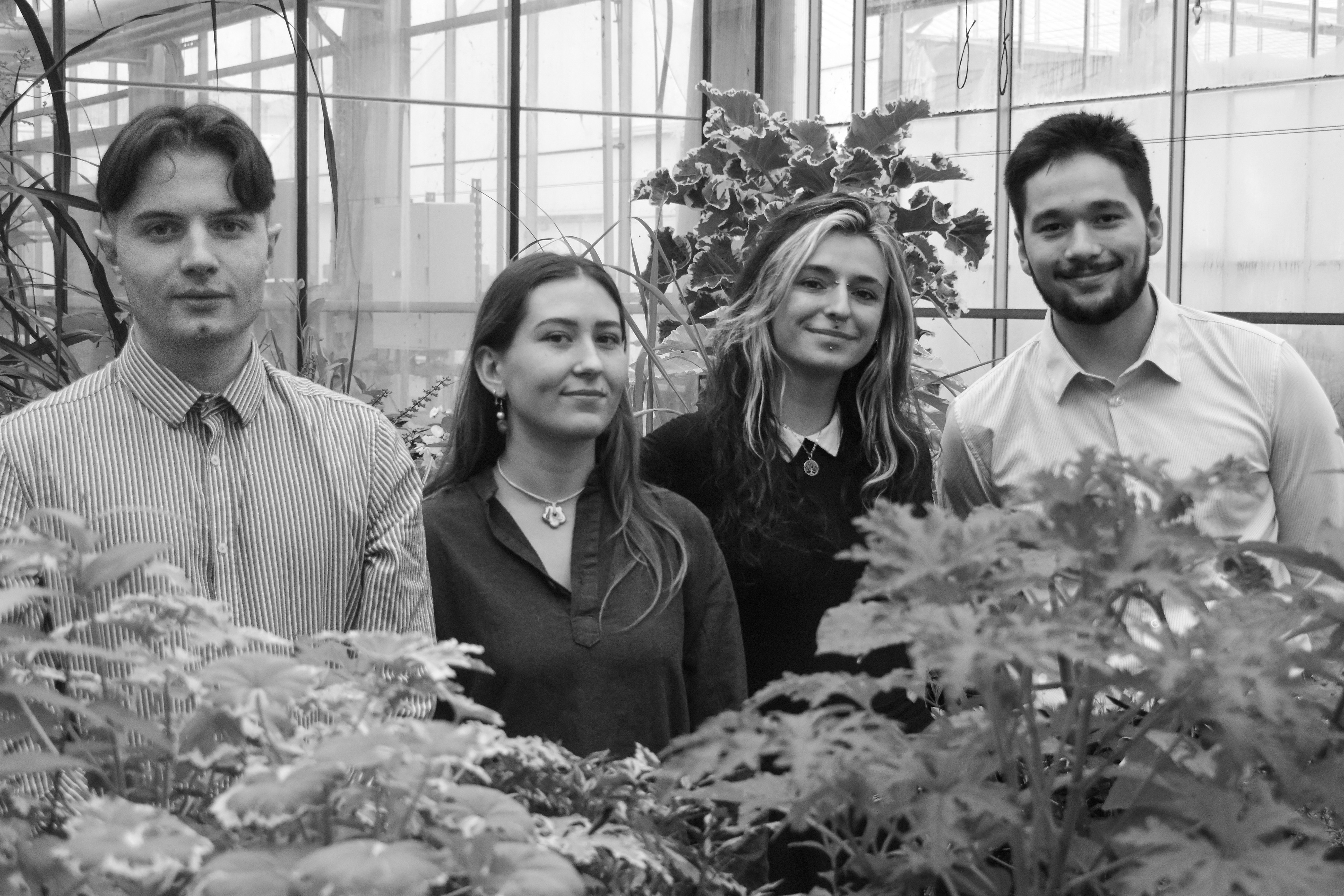
Fanny Suere was born in Nantes and grew up in the heart of the Loire countryside, which provided her first exposure to landscape. She explored her surroundings during her wanderings, guided by her curiosity and close attention to her surroundings. Nantes provided her with a sensitive experience of public spaces in which everyday uses and artistic expressions coexist. Her career has been guided by a common thread: the pleasure of learning. Her training in biological engineering, specialising in agronomy, gave her a deeper understanding of the fundamentals of living things, furthered by an apprenticeship at La Forêt nurseries during which she learnt the ropes of horticultural production. Landscape design established itself as an ideal field of action in which she could combine her areas of expertise and design environmentally-friendly amenities. She turned to landscape engineering at the Institut Agro Rennes-Angers, where she developed a collective and technical approach to projects on a variety of scales. She has been involved in a number of professional and academic projects, including the student exhibition Vingt mille lieux sous le vert (Expo Flo, 2024 edition), a field study placement with an environmental organisation in Quebec and participation in the Chaumont-sur-Loire International Garden Festival. For the past three years, she has also worked part-time in the Guillaume Sevin Paysages design office, contributing to the design and implementation of prime contracting projects.
Lucas Leblanc was born in the Gers département and developed a sensitivity to landscapes and natural environments in the heart of this rural area, thanks in particular to the influence of his parents, both foresters by training. After a general baccalaureate, he opted for a BTS (Advanced Technician Certificate) in landscape design, a decisive course that enabled him to acquire a technical and practical approach to landscaping. Currently a student at the Institut Agro Rennes-Angers, he is an apprentice at Artifex, where he is involved in the landscaping aspects of environmental impact studies, as well as design and site supervision assignments. This experience, rooted in a regulatory, territorial approach to the landscape, nourishes his thinking and enriches a practice that he hopes eventually to focus on the design of human-scale landscapes, where the garden becomes an intimate space for dialogue between nature, uses and sensibility.