44. Le tourbillon de la succession
Garden by Cassian Schmidt and Bettina Jaugstetter
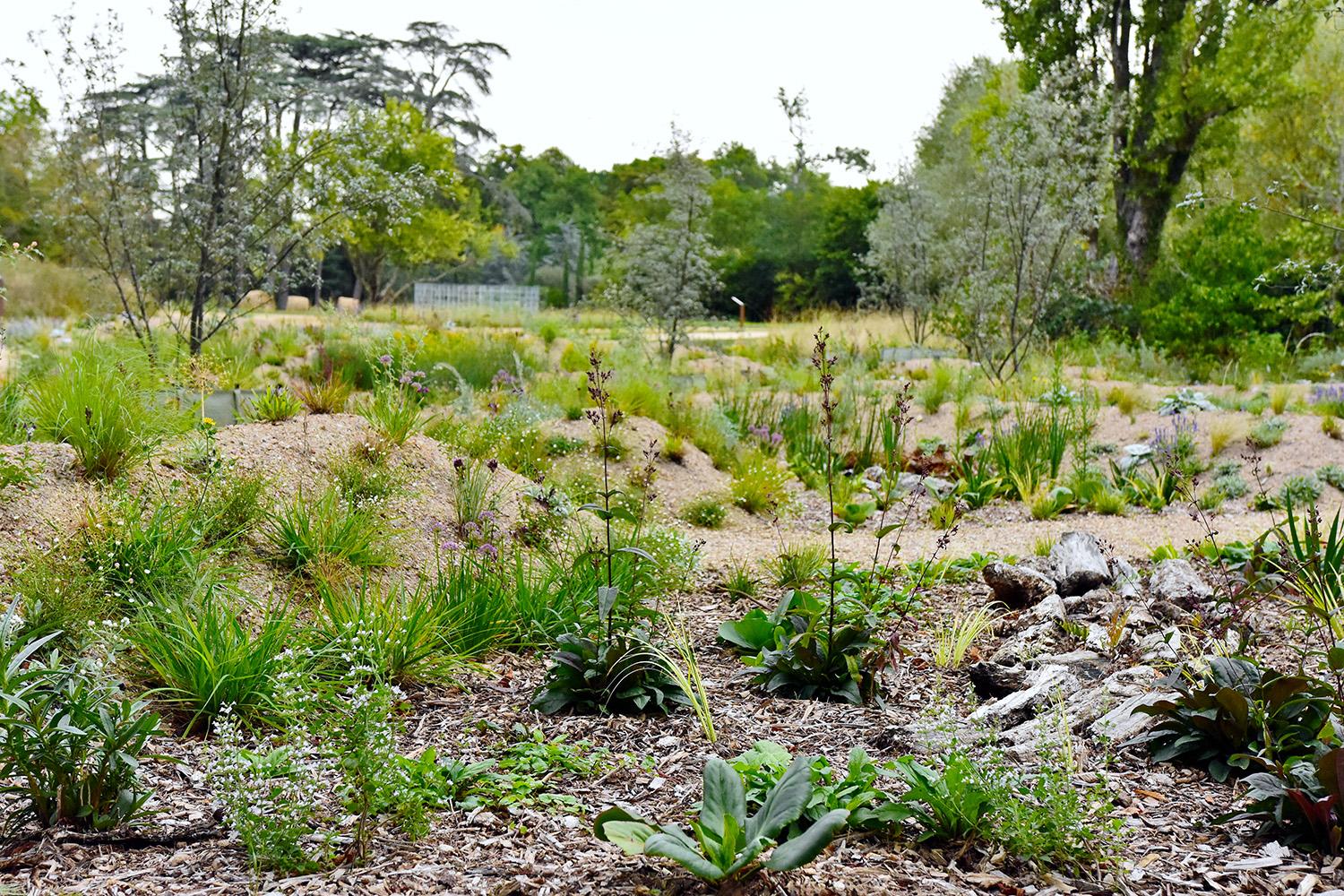
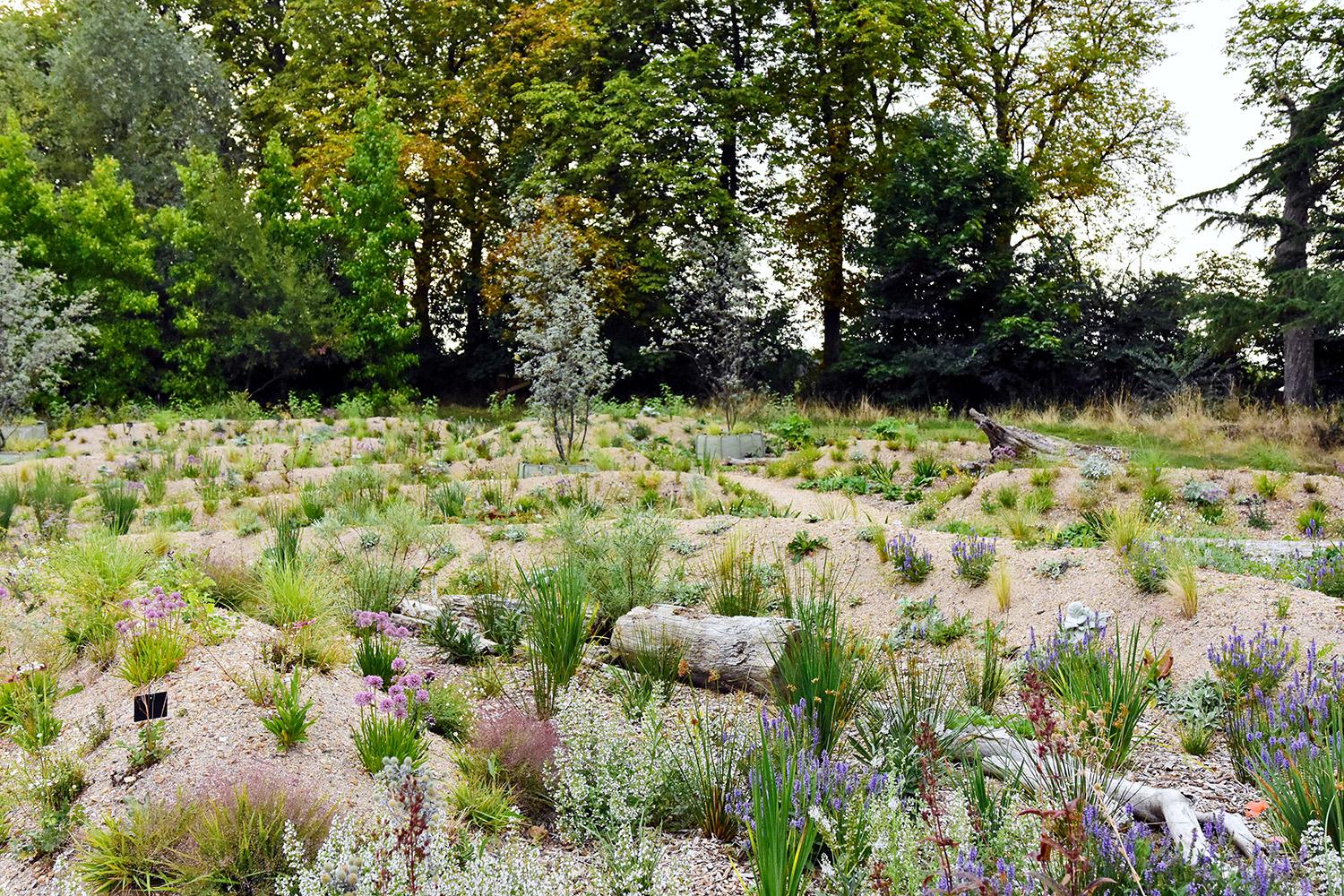
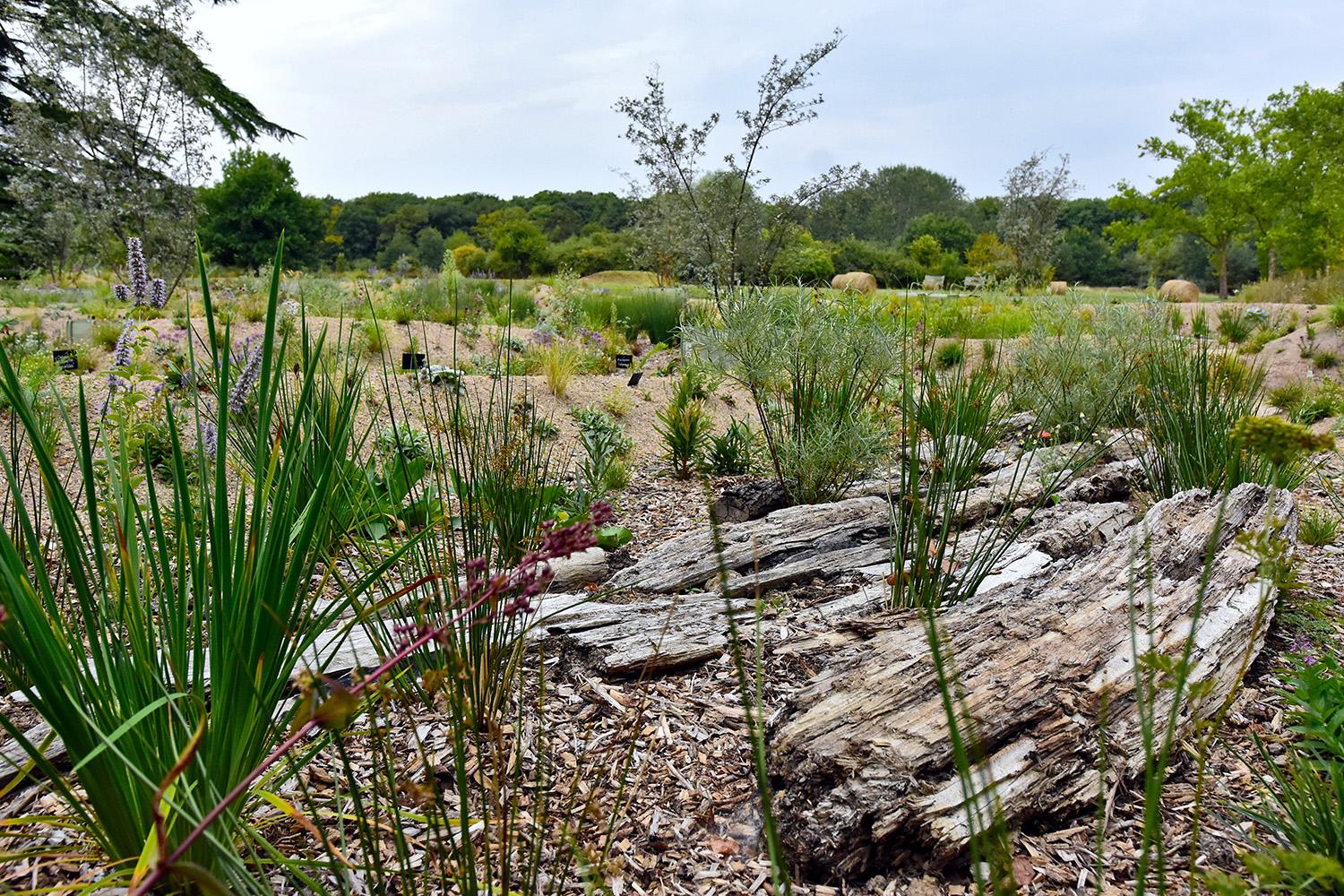
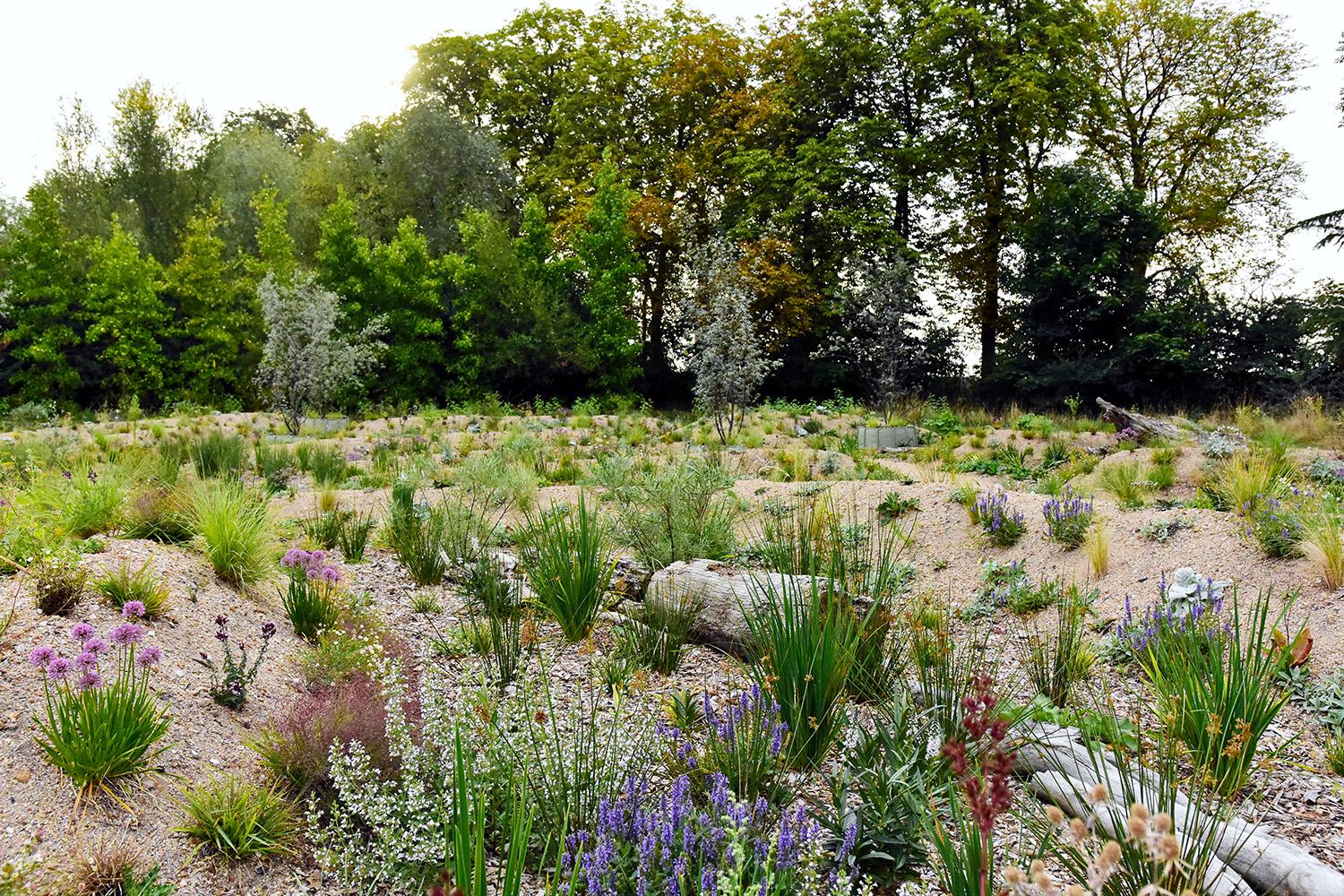
The design explores the ecological process of succession — the way in which plants make a new space their own and form characteristic plant communities, in response to the stressful conditions of a given habitat. The garden is inspired by the patterns of ridges and valleys specific to riverscapes: the troughs, which are rich in organic matter and water, are conducive to the decomposition of wood, which provides an ideal substrate for new plants to emerge. These enrich the soil, preparing the ground for future generations of plants. On the other hand, the ridges are shaped by a mineral, dry and nutrient-poor substrate, and are home to pioneering plant communities from steppe-like habitats. At the centre of the garden, the vegetation culminates in a wetland area planted with sedges and rushes. Over time, the composition will evolve, encouraging us to be attentive observers of these constant changes.
DESIGNERS

Cassian Schmidt has built important bridges between design and ecology, establishing himself as one of the leading figures in contemporary planting design. A landscape architect and horticulturist with over 35 years of experience, he directed the renowned Hermannshof Garden in Weinheim for 25 years, where he developed habitat-based naturalistic perennial plantings. Known for advancing the “New German Style,” Schmidt’s work blends stress-tolerant plant communities with sustainable, low-maintenance strategies for urban landscapes. Currently, Schmidt is a professor of planting design at Geisenheim University and the Technical University Ostwestfalen-Lippe. He also chairs the German Perennial Plant Association’s (BDS) “Arbeitskreis Pflanzenverwendung”. As a designer, consultant, and international lecturer, he shares his vision for ecologically inspired, visually compelling planting designs often inspired by prairie, steppe, and grassland ecosystems.
Bettina Jaugstetter is a landscape architect blending innovative planting design with a deep understanding of dynamic plant communities. A graduate of TU Munich/Weihenstephan and trained at the Botanical Garden, she specializes in creating ever-changing gardens that celebrate seasonal transformations. Her designs range from private and public gardens to modular green spaces for industrial areas, focusing on low-maintenance mixed plantings based on functional plant strategies. Bettina collaborates with institutions like the Hermannshof Trial Garden and co-authored Pflegereduzierte Grünflächen. Her award-winning projects, including modular plantings for the facilities of ABB, highlight her dedication to sustainable, aesthetically rich spaces. She runs her own design studio, teaches planting design at Geisenheim University, and in 2023, co-organized the international symposium The Dynamic Vision, which brought together experts in naturalistic planting design.
Anna Lena Hahn is a landscape designer and researcher specializing in ecological planting design and collaborative design processes. She recently completed her PhD on the revitalization of post-industrial landscapes, integrating ecology, art, and landscape architecture, and holds a BTSA degree from the École supérieure d'Agriculture in Angers. Anna Lena co-founded the design studio Atelier Za’atar in 2019 and works as an independent planting designer, including for the Paris-based company BACSAC. Her work centres on dynamic plant communities that are designed to adapt and transform over time. This approach is influenced by research at the renowned Hermannshof Garden and the University of Michigan's Landscape Ecology, Perception, and Design Lab. In 2023, she co-organized the international symposium The Dynamic Vision, bringing together experts in naturalistic planting design.